HISTORY
The Shinkolobwe mine is located in the southeastern province of Haut-Katanga in the Democratic Republic of Congo. It was a former uranium mine used by the Americans to procure fissile material for the Manhattan Project, with 2/3 of the fissile material in the Manhattan Project originating from Shinkolobwe [1]. Before the Manhattan Project, the Germans had attempted to use an intercepted shipment of uranium for their (failed) nuclear program. Eventually, the Americans abandoned the mine during the 1960s when domestic uranium production made imports unnecessary; the Belgian company Union Minière subsequently sealed the mine with concrete. [2]
Even though the mine had been sealed following the DRC’s independence in 1960, artisanal mining continued throughout the region due to abundant alternative ores including cobalt, silver, and copper. Lack of access to materials, coupled with few means for alternative sources of income, meant that the mining at Shinkolobwe occurred under increasingly hazardous conditions. In 2004, an old section of the mining shaft collapsed killing eight people and injuring a further thirteen. Even though the Shinkolobwe had officially been closed off by presidential decree some months earlier, illegal mining continued in the area. [3]
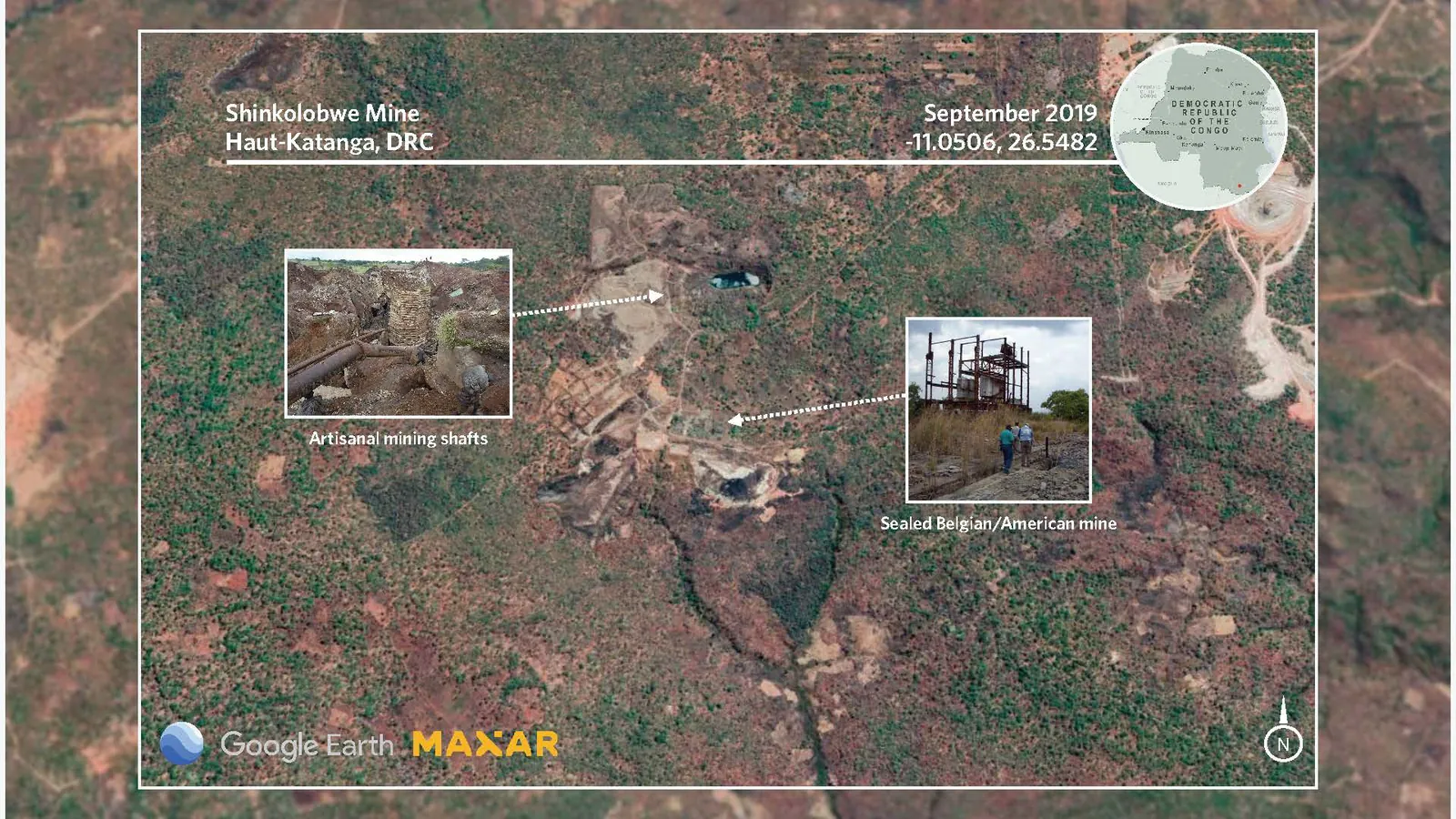
In 2006, a DRC sanctions committee report found that the “smuggling of radioactive materials [...] are far more frequent than previously assumed.” [4] These included the confiscation of over 50 containers containing uranium or cesium in or around Kinshasa, as well as the securement of 100 kilograms of uranium ore. While international organizations such as Interpol have attempted closer collaboration with Tanzanian and Congolese authorities, government officials have been reluctant to provide more information. A French documentary in 2017 [5] on the illegal shipments of uranium from the Congo through Tanzania also alleged that government officials had been conspiring with artisanal miners in the smuggling of uranium from Shinkolobwe. Their investigation further highlighted the near-inexistent security infrastructure surrounding the mine, raising doubts about how inactive Shinkolobwe truly was. While these claims have yet to be substantiated by third parties, they ultimately raise more questions than answers.
SECURITY CONCERNS
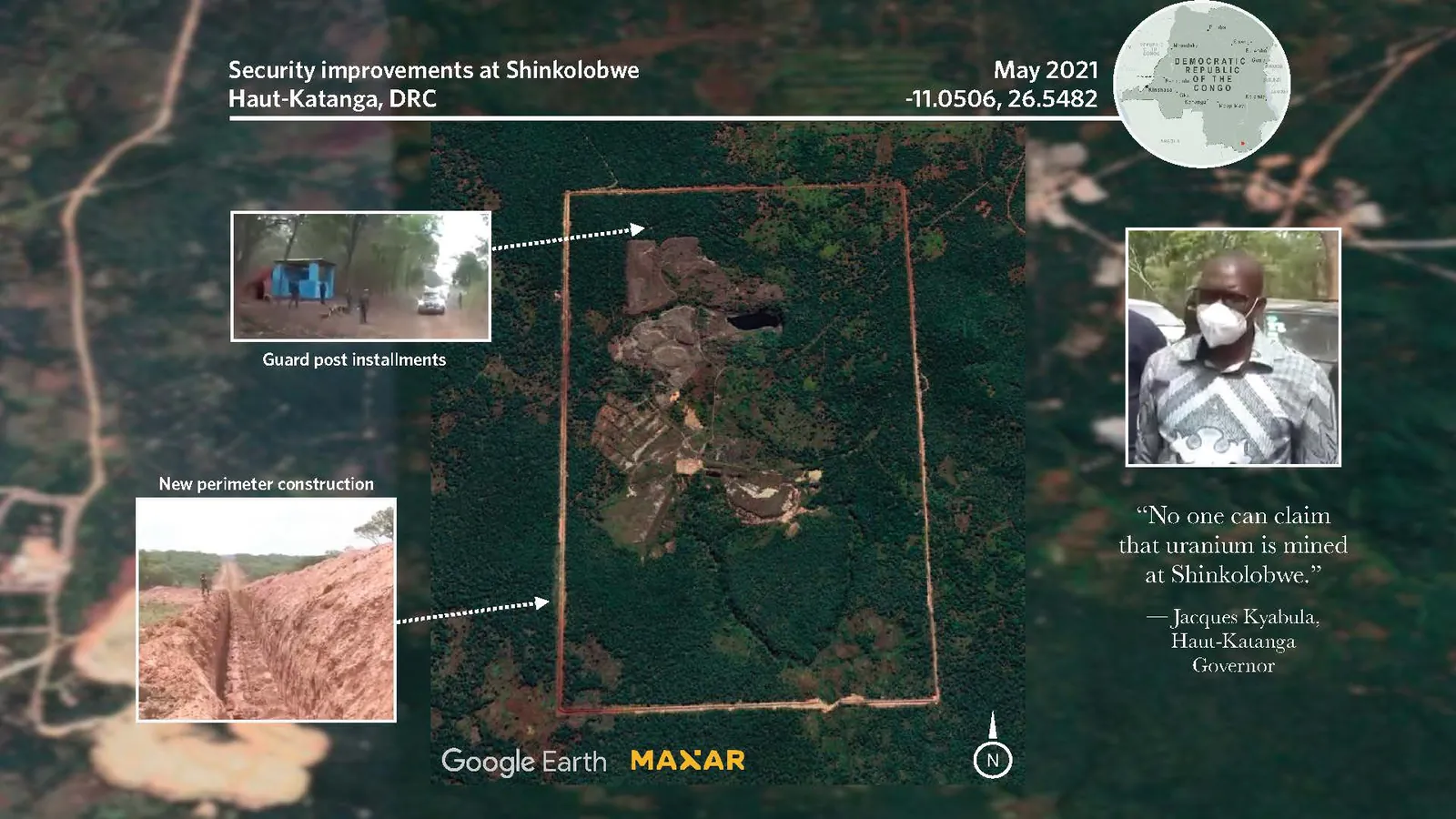
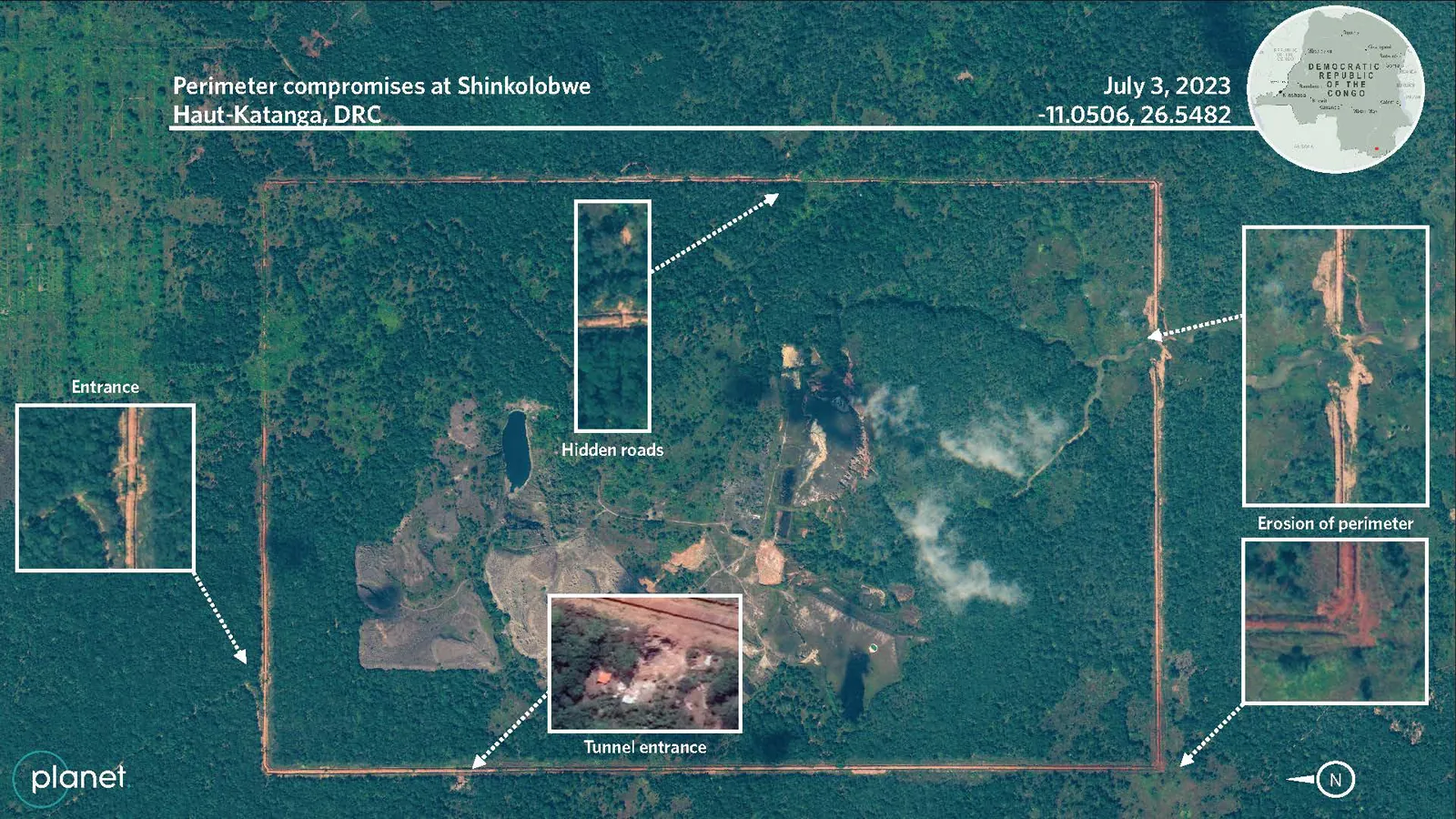
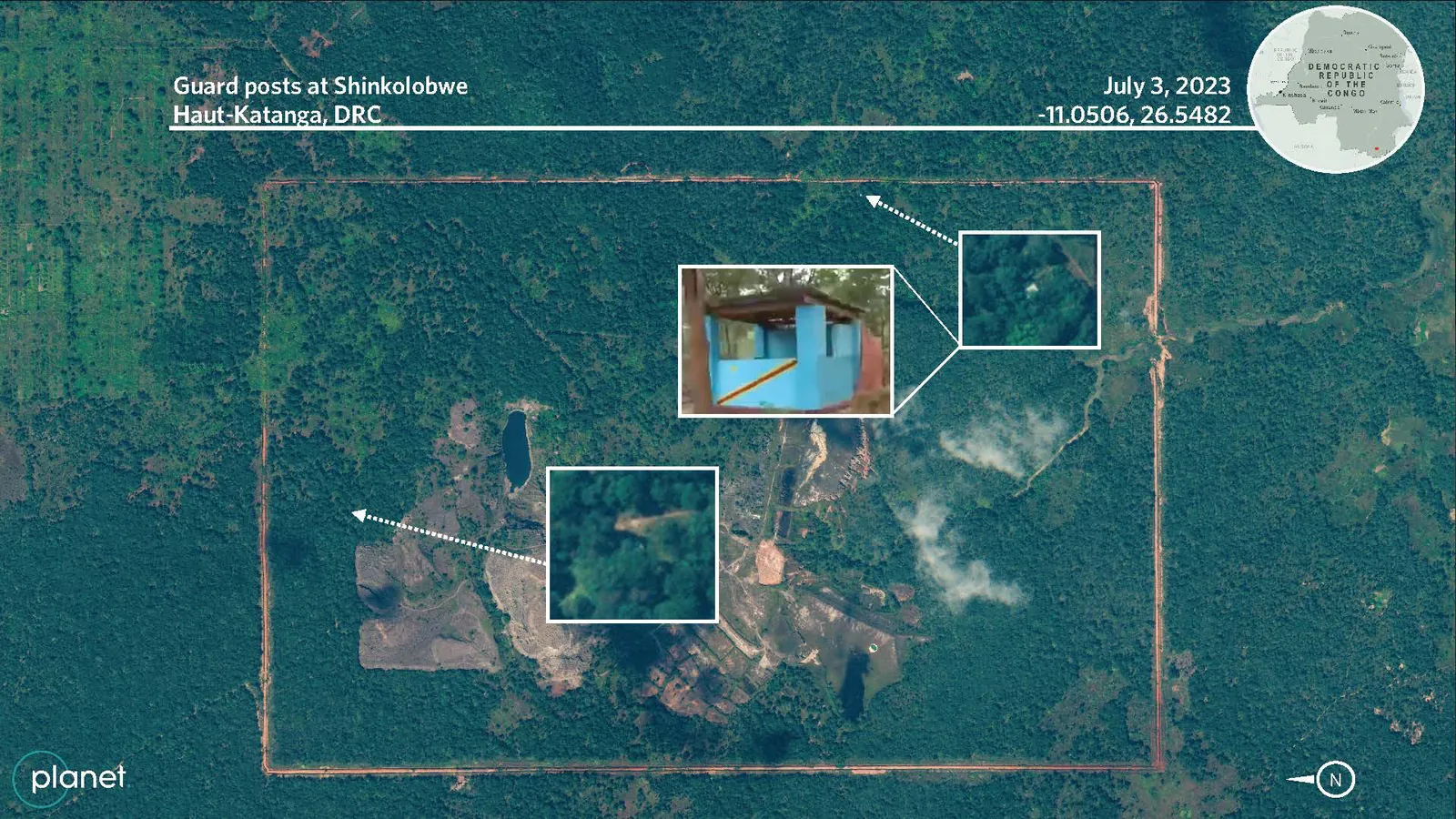
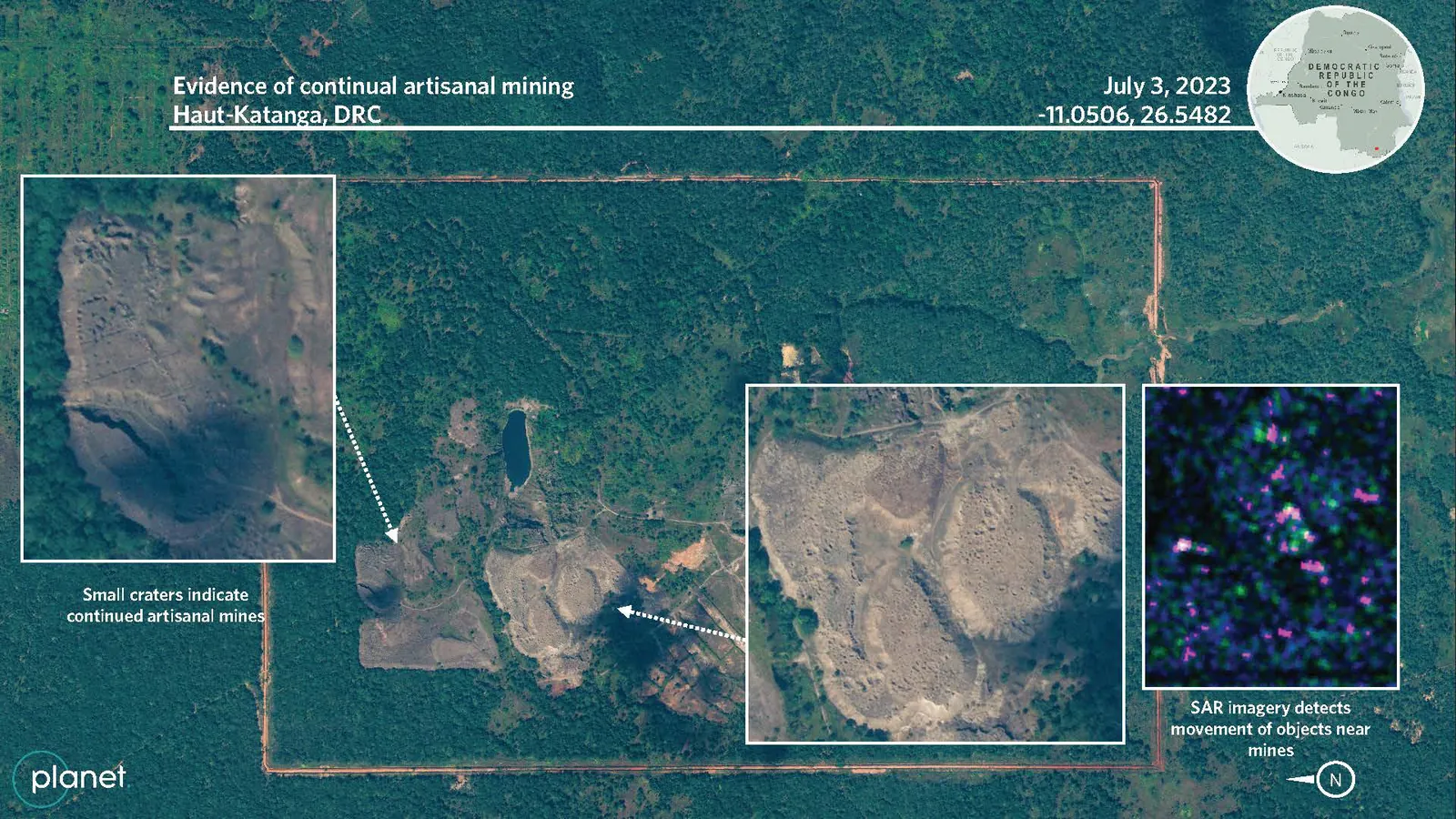
The perimeter constructed around the Shinkolobwe mine shows multiple compromises, both due to a lack of maintenance and human action. These breaches include hidden road entrances, trench erosions, and a tunnel. Furthermore, the checkpoints constructed by the governor are ill-placed and are not likely to deter artisanal miners in the area. The last argument is further reinforced by the existence of new, pox-like craters in the rockface surrounding the mine.
FOREIGN INVOLVEMENT
The construction of the perimeter was undertaken by Kai Peng Mining (KPM), a Congolese mining company that is owned by the Shenzhen Yite Holding Company.
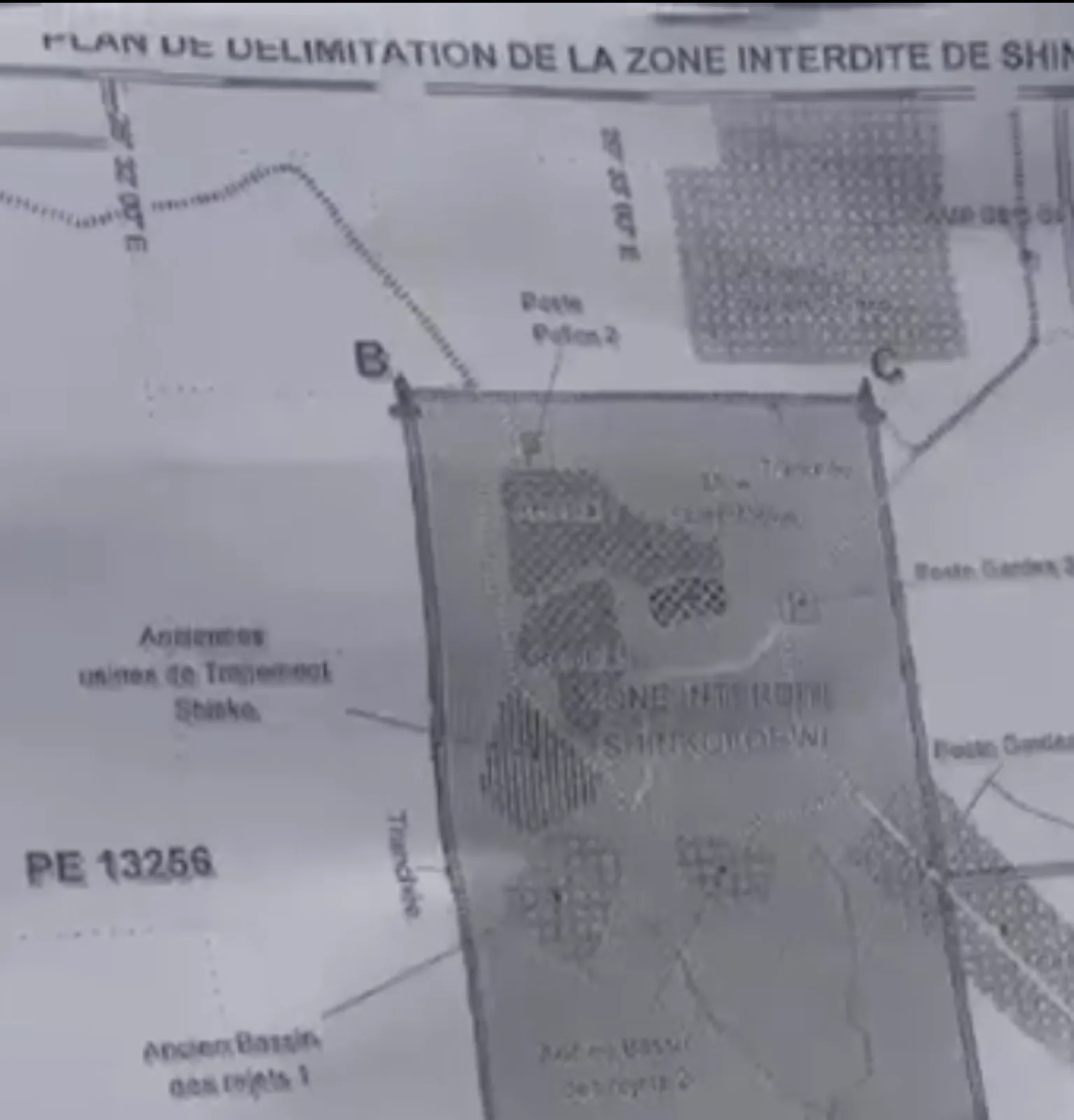
The evidence for Chinese involvement stems from a video in which the governor inspects the newly constructed trench. For a few frames, one can see him holding a document that reveals a construction code referring to the mining contract giving KPM access to the area for the exploitation of copper, cobalt, construction, and research. An analysis of the contract (PE13256) reveals that KPM owns much of the surrounding land under separate contracts (PE13260, PE2355). These areas surround the Shinkolobwe mine.
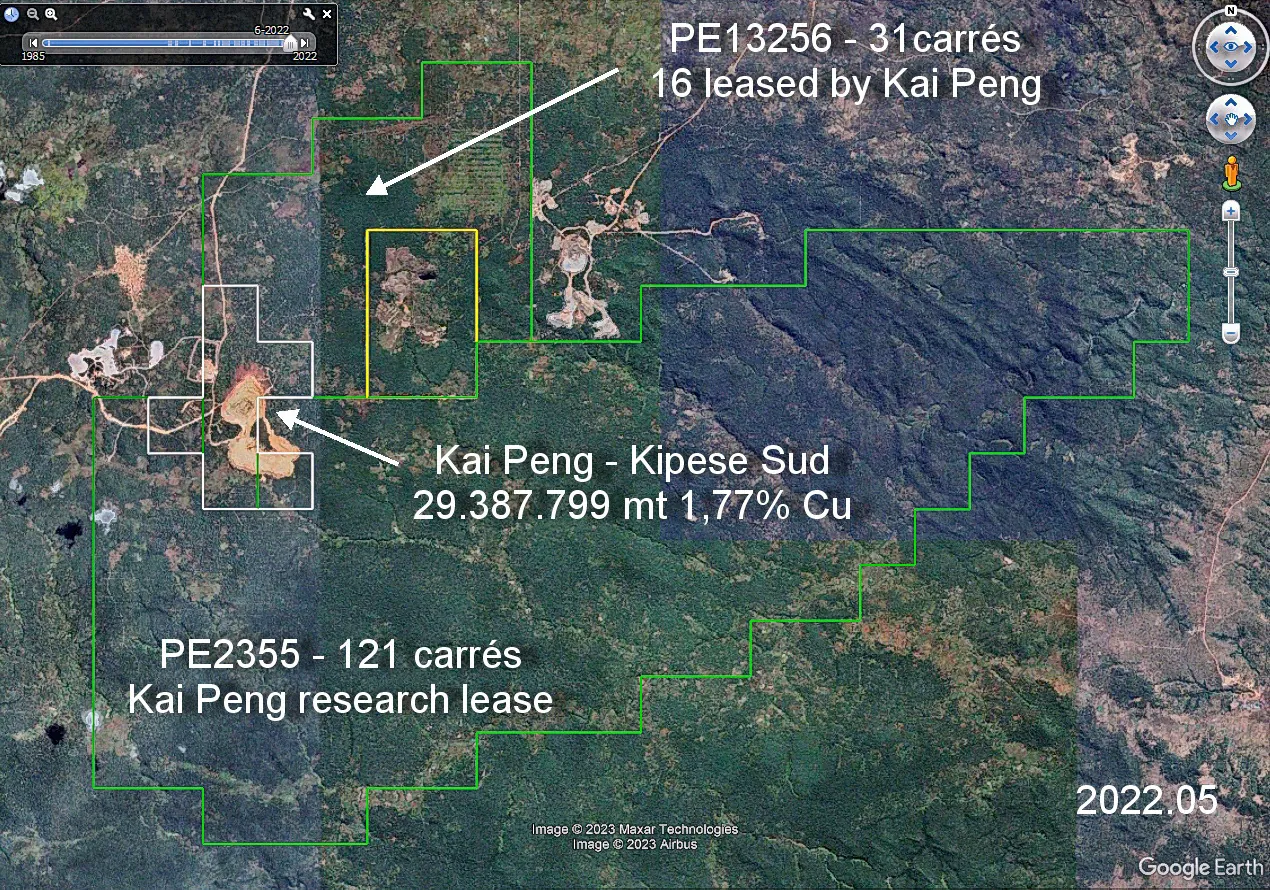
Though China mainly imports copper and cobalt from the DRC, the ownership of the land surrounding the Shinkolobwe mine arouses suspicion. Currently, little evidence ties the Chinese to the illegal artisanal mining inside of Shinkolobwe. However, the existence of hidden entrances and ownership of all surrounding infrastructure would make the Shinkolobwe mine an attractive location should China decide to supplement its current uranium imports. It is easily imaginable that uranium could be mined at Shinkolobwe, driven to a connected mine owned by KPM, packaged by unknowing employees, and sent through to Tanzania for export. Furthermore, since KPM has been granted research, construction, and exploitation rights, it is just as imaginable that a new mine near Shinkolobwe could be constructed for the purpose of uranium mining; and because the area is rich in copper and cobalt, KPM is protected by plausible deniability.
CONCLUSIONS
There is strong evidence for the continued use of the Shinkolobwe mine for artisanal mining even with the newly constructed perimeter and the governor's assurances.
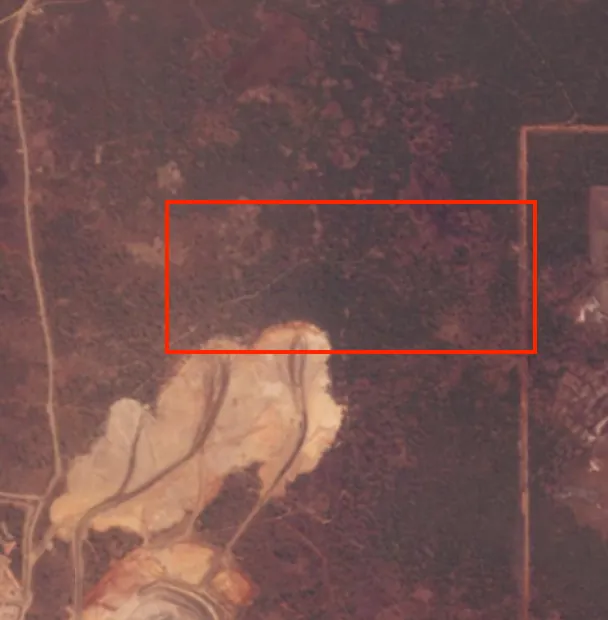
With multiple compromises on the perimeter, as well as poorly placed guard towers, the Shinkolobwe mine is not as secured as it should be. Even though this research does not answer with certainty who might be mining in the area, there is conclusive evidence that Chinese companies would have the easiest access to the mine. Furthermore, the construction of new mines adjacent to the defunct Shinkolobwe mine might allow mining for copper and cobalt to be contaminated with uranium. This would pose a health risk for local workers.
CITATIONS
- https://www.osti.gov/opennet/manhattan-project-history/Places/Other/uranium-mines.html
- http://america.aljazeera.com/articles/2015/7/23/in-congo-silence-surrounds-forgotten-mine-that-fueled-first-atomic-bombs.html
- Assessment mission of the Shinkolobwe uranium mine , UNEP/OCHA, 2004
- DOCUMENTS RELATED TO THE SECURITY COUNCIL COMMITTEE ESTABLISHED PURSUANT TO RESOLUTION 1533 (2004) CONCERNING THE DEMOCRATIC REPUBLIC OF THE CONGO
- Illegal uranium trafficking, Investigations et Enquêtes, 2017