This assessment began with a narrow question: if Russia followed through on its announced deployment of non-strategic nuclear weapons to Belarus, where would the necessary storage infrastructure be visible? Official statements establish intent and include a claim of delivery; they do not identify a storage site. Satellite imagery can narrow the candidates, but it cannot confirm what is stored inside a bunker.
What was announced
On March 25, 2023, Vladimir Putin announced an agreement to station Russian non-strategic nuclear weapons in Belarus. ICAN’s contemporaneous account records the associated claims: Belarus had received nuclear-capable missiles, up to ten aircraft had been prepared for the mission, training would begin, and a storage facility was to be completed by July. [1]
On June 16, Putin said that the first weapons had been delivered. ICAN’s update was careful on the point that matters for this analysis: it remained unclear whether nuclear warheads had actually crossed the border. [1] The United Nations likewise described the March statement as an announcement of an agreement to station weapons, not proof of a completed deployment. [2]
The imagery below therefore addresses infrastructure, not custody. It asks which sites showed construction or security features consistent with a storage mission in mid-2023. It does not treat an official claim, a fence, or a bunker as confirmation that nuclear weapons were present.
What I looked for
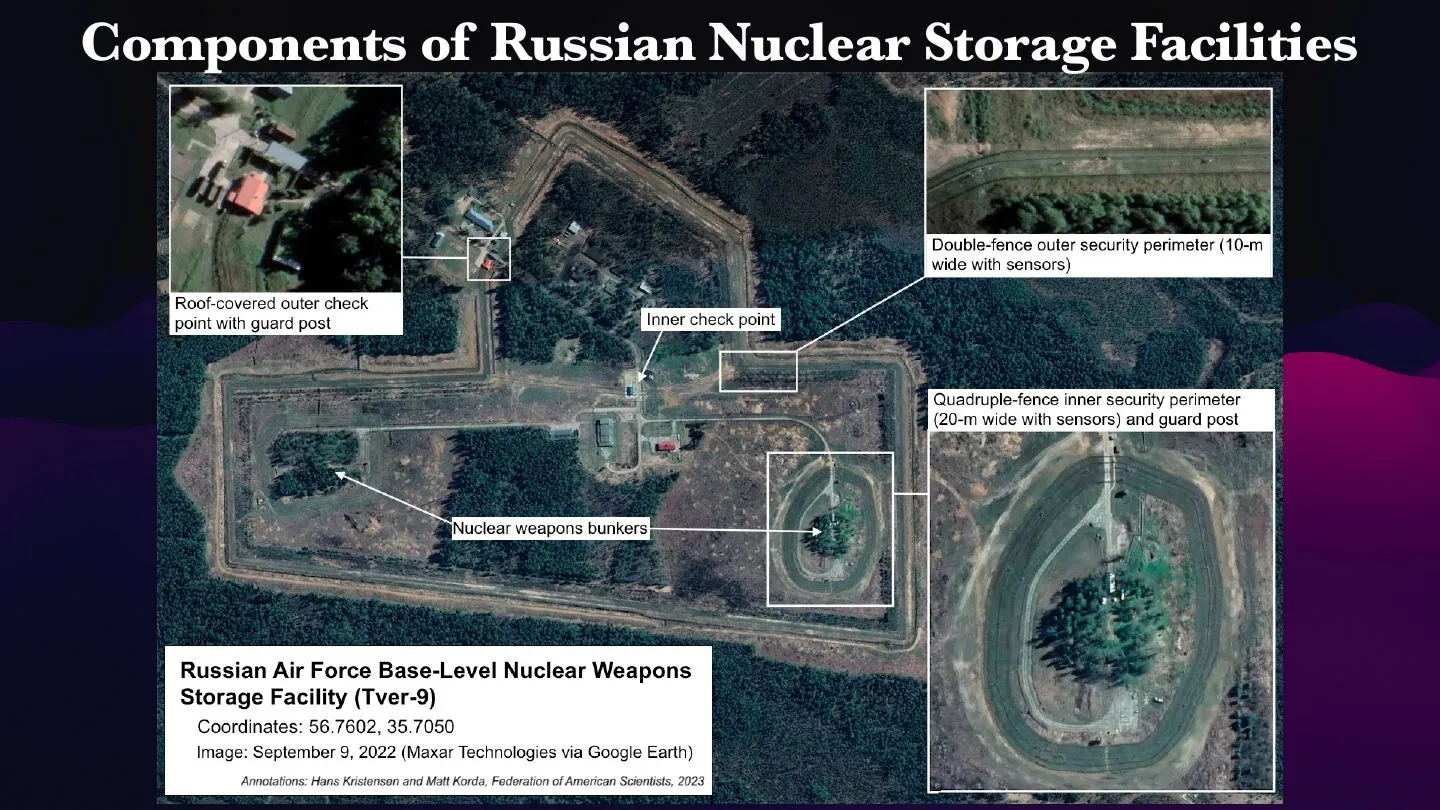
Russian base-level nuclear storage sites offer a visible reference point: layered outer and inner fencing, roofed checkpoints and guard posts, segregated storage bunkers, cleared security zones, and controlled vehicle access. These indicators are useful in combination, but none is unique to nuclear storage.
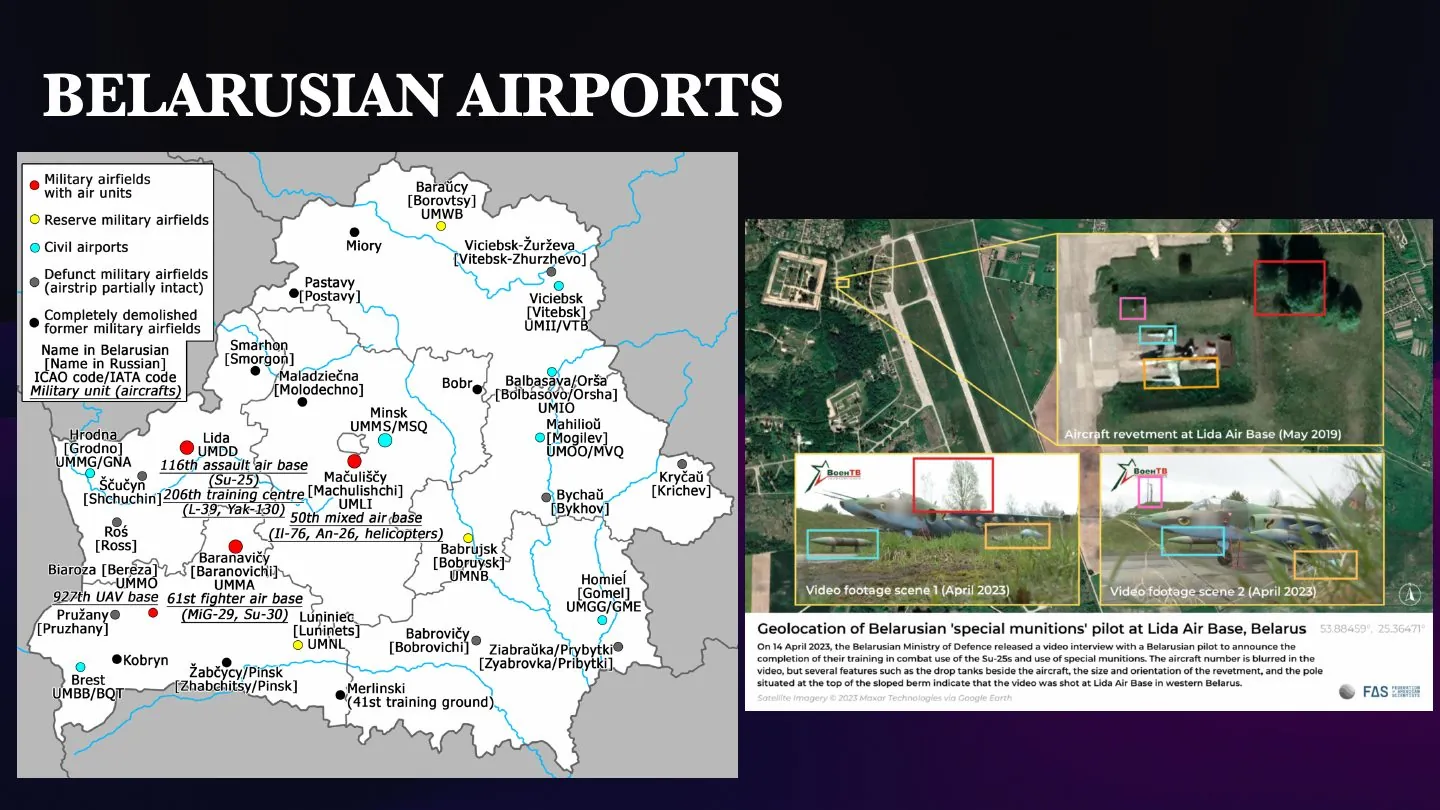
Airbase storage: Lida
The airbase review started with locations that could support the aircraft component of the announced mission. The source material geolocates a Belarusian Ministry of Defence video about Su-25 training to Lida Air Base. That makes Lida relevant to the delivery role, but does not identify the airbase as the warhead-storage site.
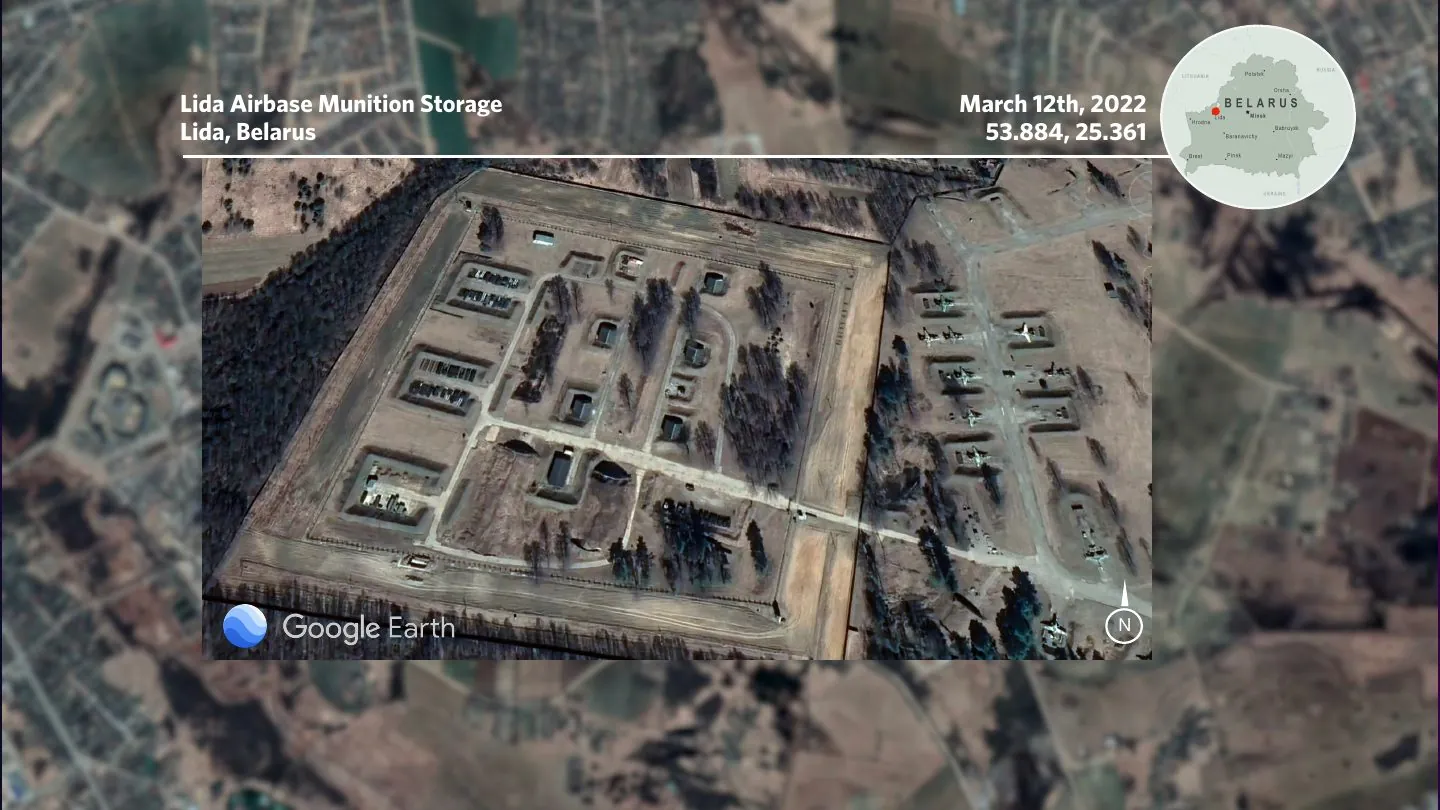
Lida Airbase Munition Storage
Imagery from March 12, 2022 provides a baseline for the airbase munitions area before the deployment announcement.
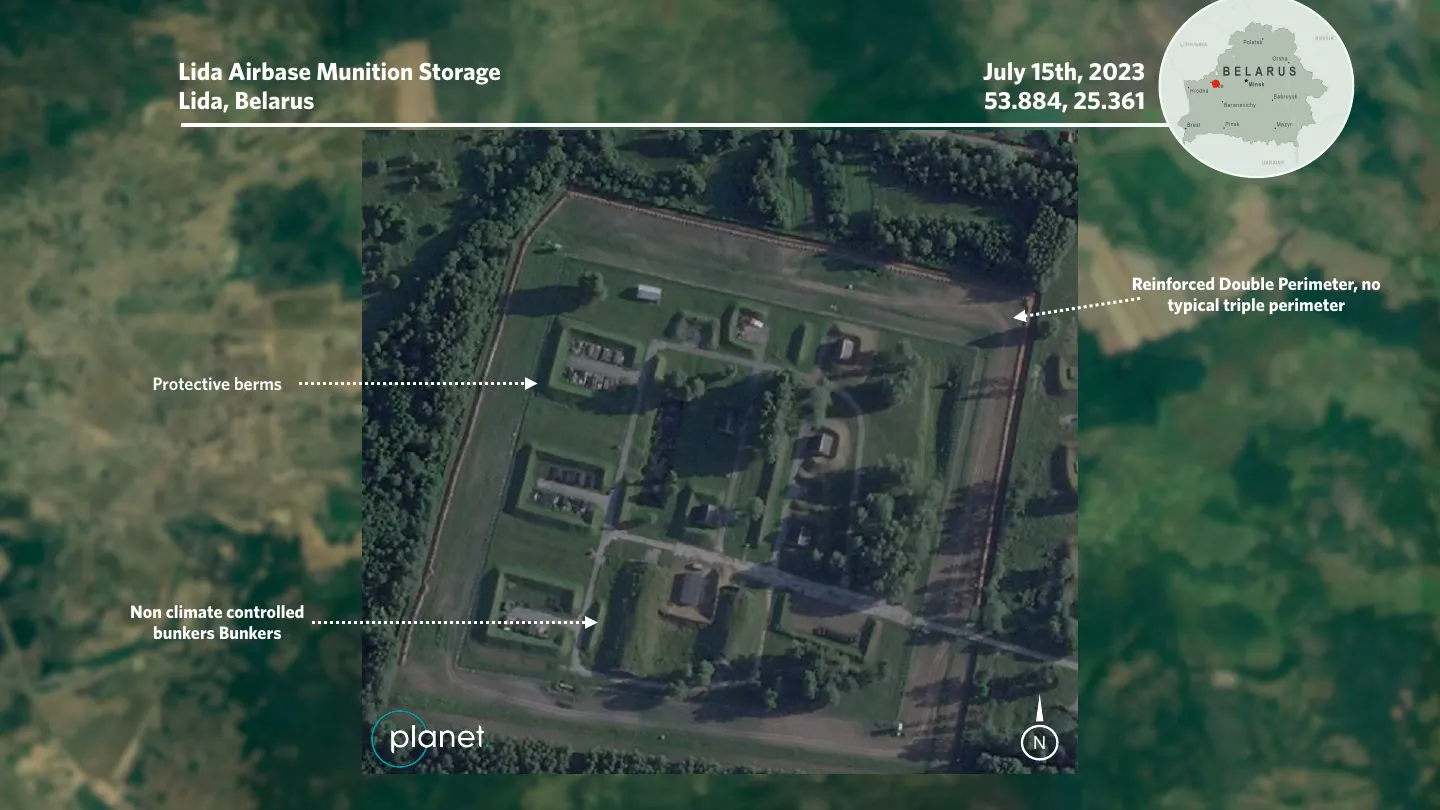
By July 15, 2023, the munitions area still showed a reinforced double perimeter, protective berms, and ordinary bunkers. I did not see the more extensive inner security layers or a clearly identifiable climate-controlled bunker used in the Russian comparison. On that basis, Lida was a weak storage candidate in July 2023, even if the base remained relevant to the aircraft mission.
Belarusian/Soviet Nuclear Storage Facilities
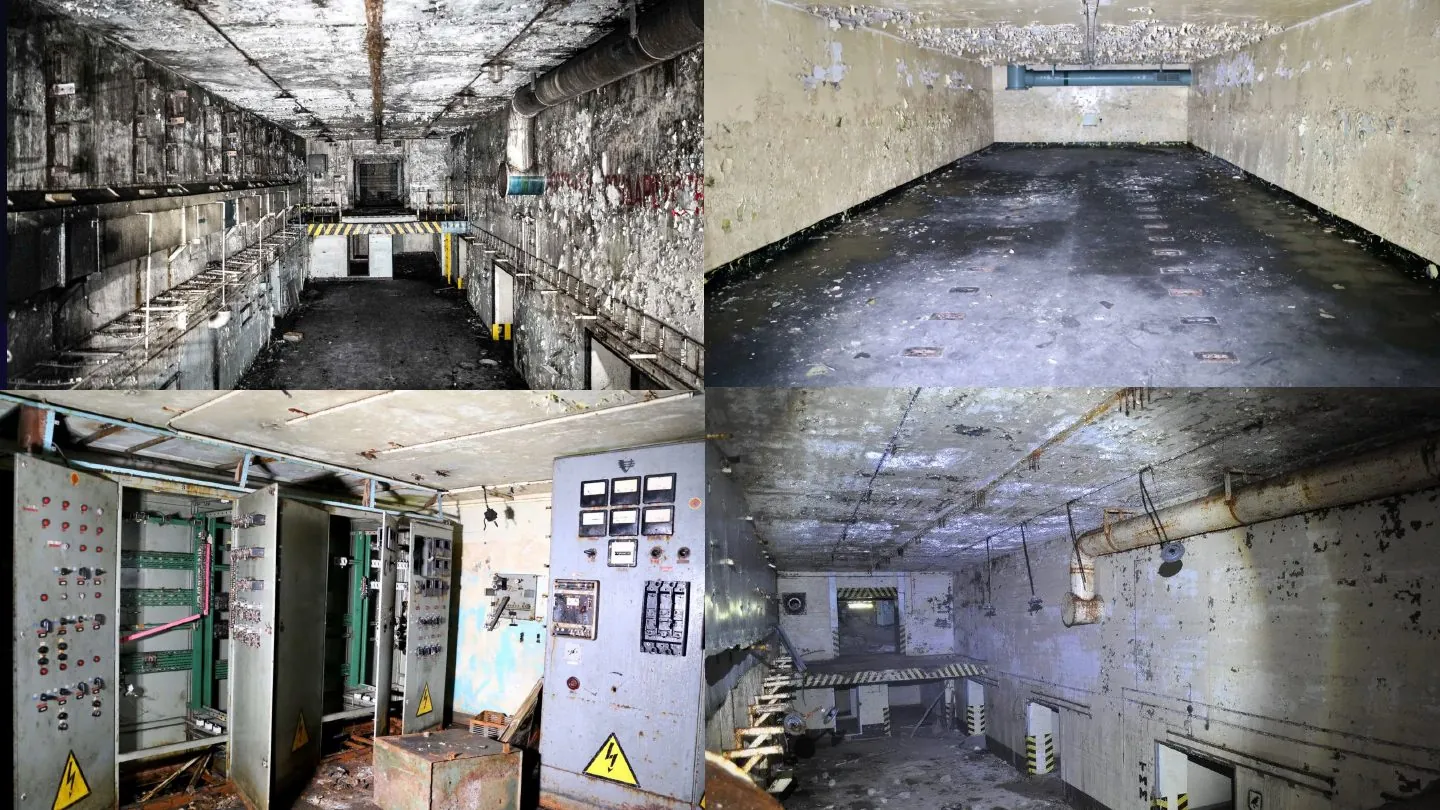
Belarus retained numerous former Soviet military sites. Reusing one would fit the public description of preparing storage, but a dormant facility would require visible renovation—especially to security, access, power, and environmental controls.
Construction at Asipovichy Munition Storage Facility
At the munitions depot east of Asipovichy, July imagery showed a new double-fence enclosure around part of an existing weapons complex, an entry checkpoint, and earth berms. This was the most consequential construction I identified because it combined a military storage function with recent perimeter work.
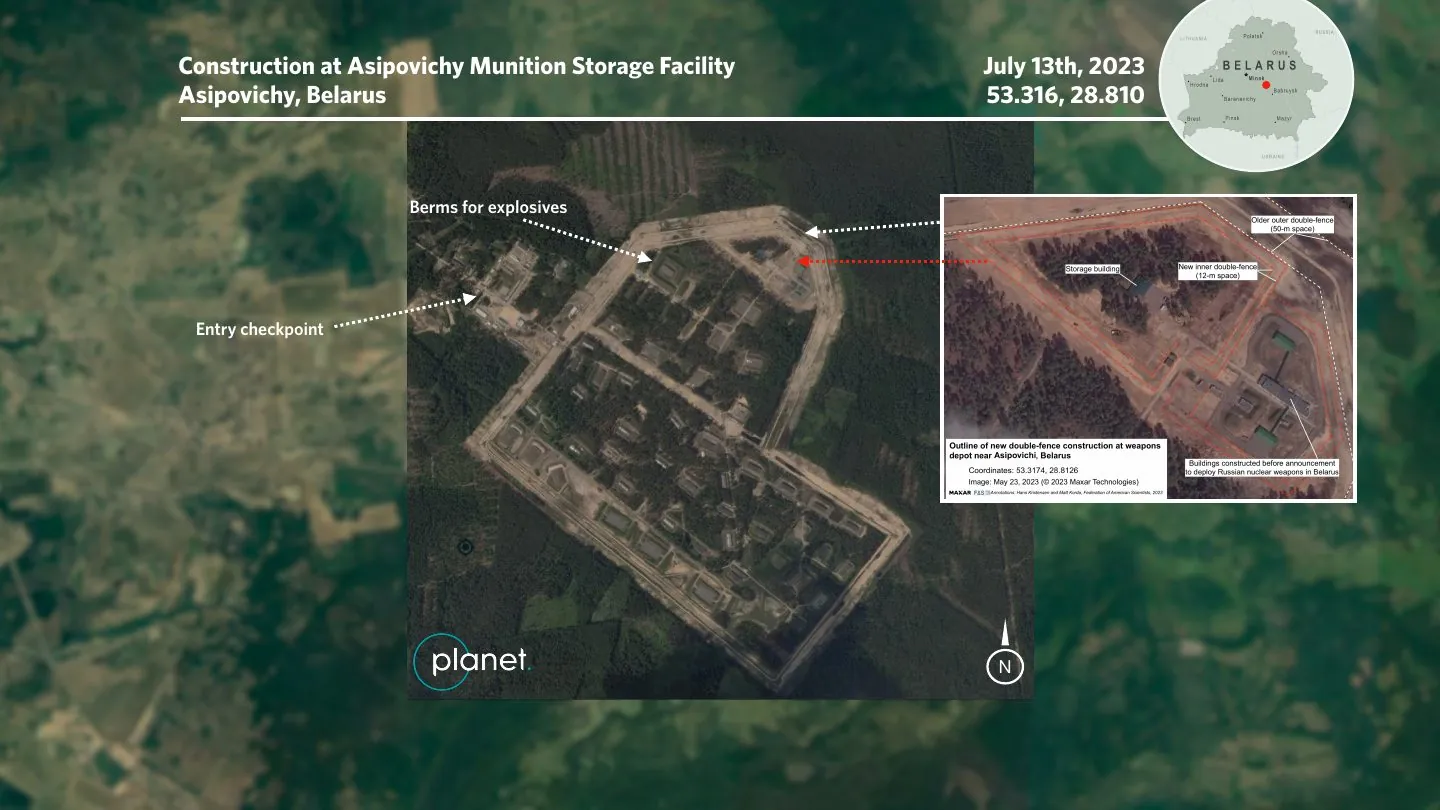
The comparison remained incomplete. The July enclosure had fewer security layers than the Russian reference facility, and the imagery did not show every support feature expected at a permanent nuclear site. The construction was consistent with higher-security storage, but also with an upgrade to a conventional weapons depot. That keeps the assessment at low confidence.
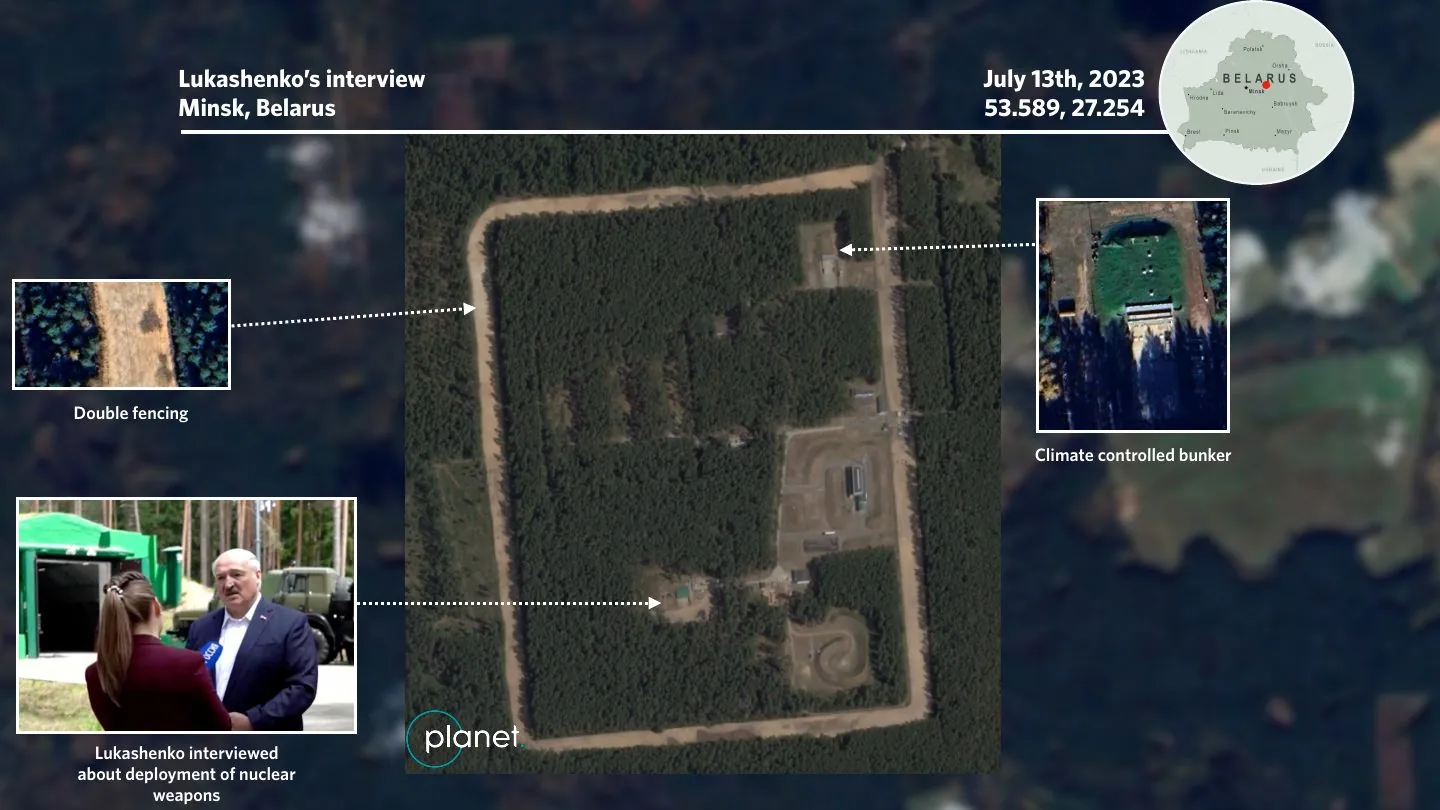
A secured site near Minsk
Separately, I geolocated the backdrop of a July 13 Lukashenko interview to a secured site near Minsk. The site showed double fencing and a bunker with a large covered entrance. The interview location is a lead, not an identification: an official standing at a facility does not establish what the facility stores.
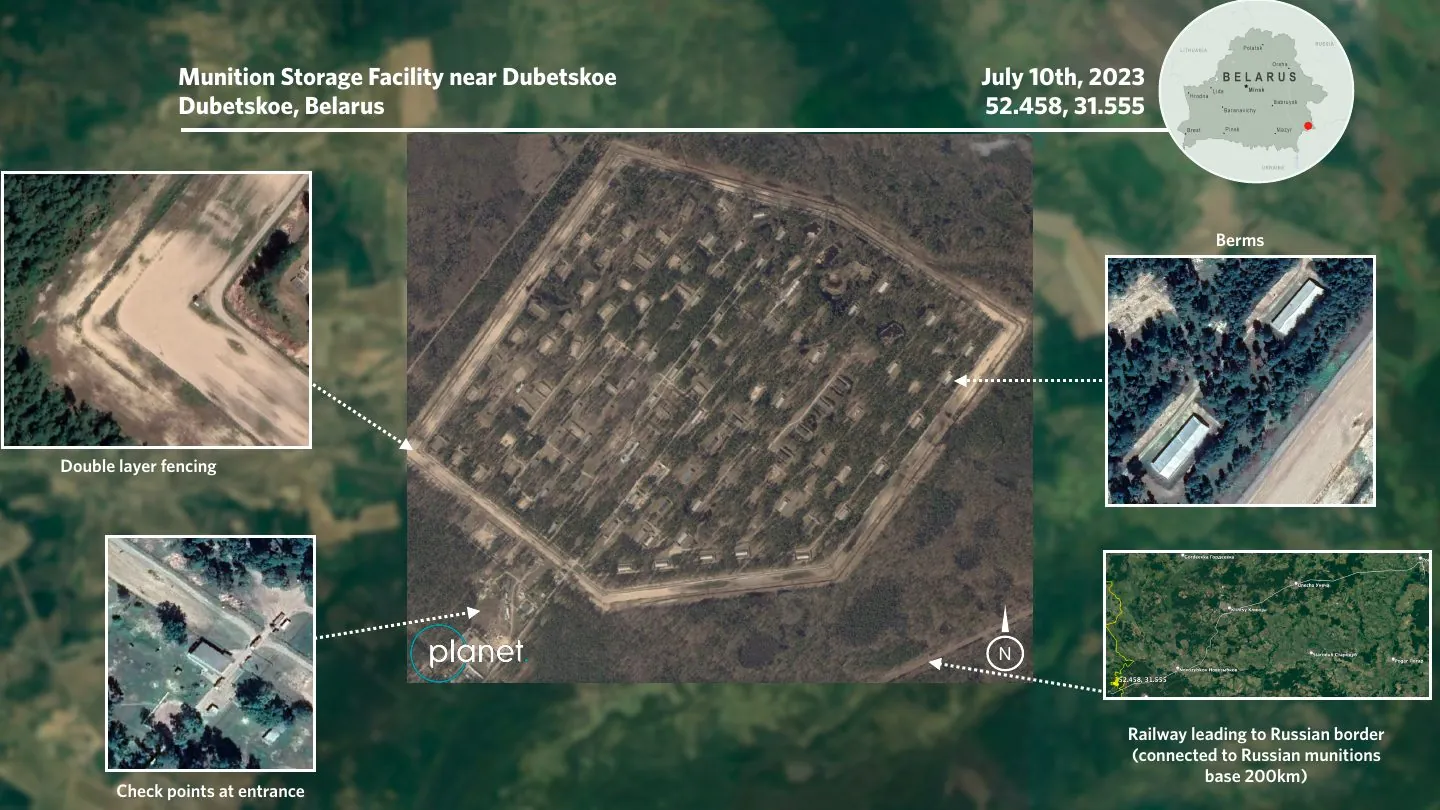
Other candidate facilities
Dubetskoe was retained as a comparison candidate because the complex had double-layer fencing, entry checkpoints, bermed storage buildings, and rail access toward the Russian border. Those characteristics would support munitions handling generally. I did not observe contemporaneous construction or a distinctive inner enclosure tying the site to the 2023 announcement.
Conclusions
As of July 2023, Asipovichy was the strongest candidate in this review because it was the only site where new security construction overlapped with an existing munitions-storage function. That is a comparative judgment, not confirmation that Russian warheads were present.
Lida appeared relevant to the aircraft portion of the announced arrangement but weak as a warhead-storage candidate. The Minsk site and Dubetskoe had compatible features, but the imagery did not show a clear 2023 upgrade connecting them to the deployment.
The next indicators to watch were additional inner fencing, roofed checkpoints, cleared sensor corridors, climate-control or power work at bunkers, segregated support areas, and controlled rail or vehicle movements. Until several of those indicators appeared together, the most defensible conclusion was that the deployment claim and the storage-site identification remained separate questions.