The mysterious 5-axis machine of the Taesung machining factory used to construct impellers which are vital in the use of turbopumps for rockets and missiles has been identified as a German Spinner machine (MC 650/810/1020 model). This line of machines has been discontinued since the mid-2000s. It was likely purchased at a Spinner expo that was hosted in China around 2006, which coincides with the expansion of the Taesung machining plant.

Background
The Taesung machining factory, also known as the Chamjin Munitions Factory, Chamjin Missile Factory, or Chamjin Ammunition Plant, is the DPRK’s “primary manufacturer of ballistic missiles, conducting final assembly of components and subsystems it has produced or from those supplied to it from other facilities and sources” (KPA). The intelligence community has extensively studied this plant, and many of the capabilities of the machining factory have been uncovered. However, some questions have remained unanswered.
On March 2nd, 2016, the DPRK issued a report including a film honoring Kim Jung Un’s visit to the Taesung machining plant. From this video, we receive an inside look into the production capabilities of the machining plant. Most of the machines within the plant had previously been identified by MIIS’s East Asia team, though one device had not. At the 2-minute and 30-second mark, one sees a large, gray, and blue machine. The MIIS team had correctly identified the machine as a 5-axis machining center through a green sign; though the manufacturer and model of the machine remained unknown.

5-axis machines are vital in producing missiles as they allow for the construction of highly specialized parts such as impellers. An impeller is a crucial component in a turbo pump used in rocket engines. It is a rotating component that increases the pressure and flow rate of a fluid, such as fuel or oxidizer, by using centrifugal force. The impeller accelerates the fluid from the inlet to the outlet, creating a high-speed, high-pressure stream that is then directed into the combustion chamber of the rocket engine.
Additionally, the impeller is designed to operate at very high speeds and under harsh conditions, such as high temperatures and high centrifugal forces. This makes it a critical component in the performance and reliability of the turbo pump, and a key factor in the overall success of the rocket launch.
The importance of an impeller in a turbo pump for rockets lies in its ability to pump large quantities of fluid at high pressures, which is necessary for efficient combustion in the rocket engine. Without the impeller, the rocket engine would be unable to pump the necessary fuel and oxidizer into the combustion chamber quickly enough to sustain combustion, resulting in engine failure.
A turbo pump is a type of pump commonly used in liquid rocket engines to pump fuel and oxidizers into the combustion chamber. It is often used in high-performance, high-thrust rocket engines requiring high flow rates and pressures to sustain combustion. As a result, turbo pumps are commonly found in large, powerful missiles, such as intercontinental ballistic missiles (ICBMs), as well as in launch vehicles and space rockets. These missiles use liquid rocket engines, which require the precise control of fuel and oxidizer flow rates and pressures to generate the high thrust needed for liftoff and successful flight.
In general, any missile that uses a liquid rocket engine would likely use a turbo pump to deliver the fuel and oxidizer to the combustion chamber. The specific type of turbo pump used will depend on various factors, such as the size and performance requirements of the missile, the operating conditions, and the specific requirements of the engine.
The importance of being able to identify the model of the 5-axis machine is due to the unique specifications of the machine itself, allowing us to better pinpoint the limits and abilities of DPRK in the production of its impellers; from this information, we may better understand the capabilities of North Korea’s missile program.
Identifying the machine
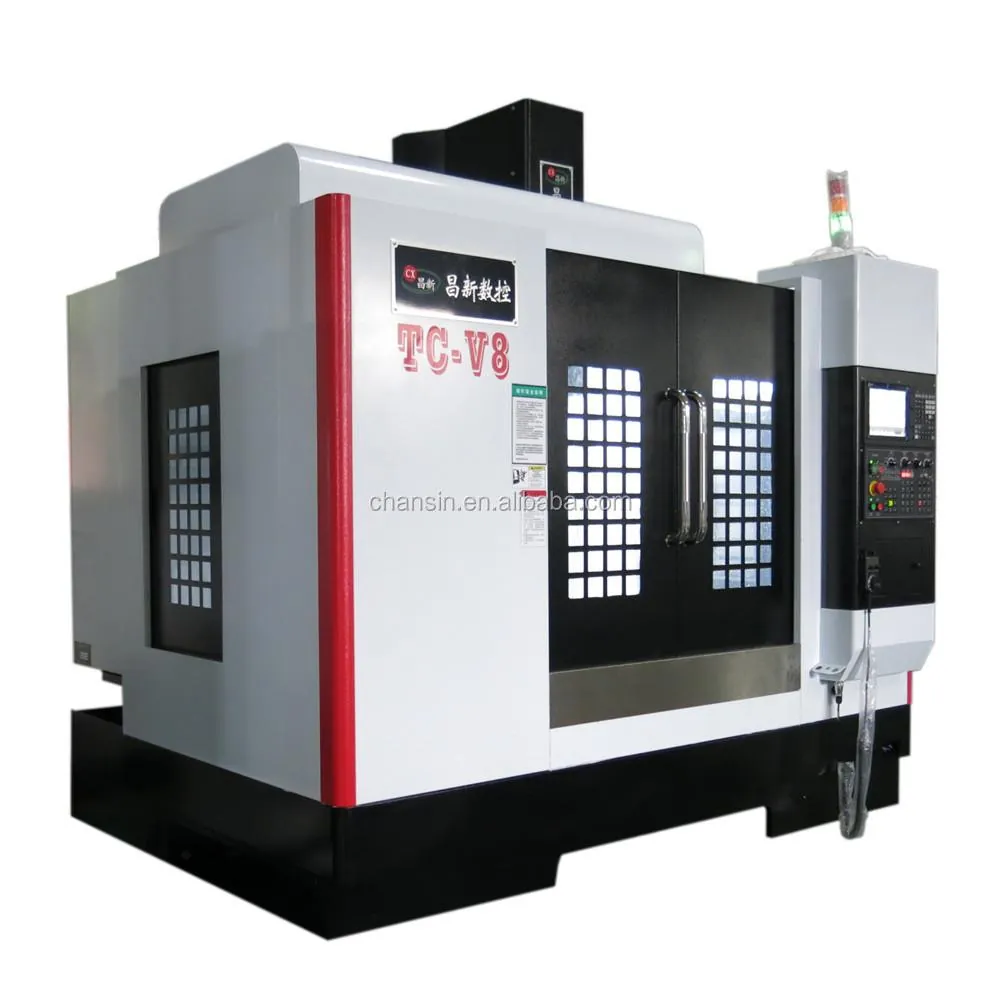
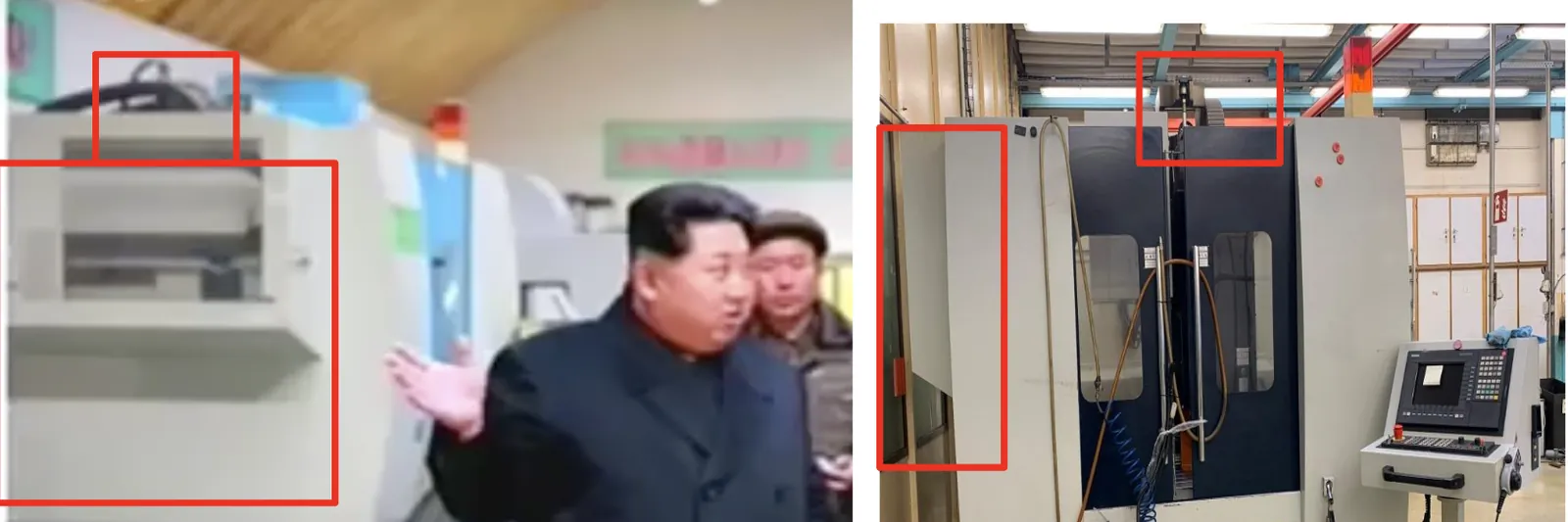
There are multiple key features of Spinner machines that mirror the machine from the Taesung machining factory. Many of the DPRK’s tools are purchased from Chinese manufacturers; these machining centers have a distinct warning-light construction that does not match the warning light found on the North Korean 5-axis machining center. However, Spinner machines have this unique light configuration that does not contain a green section and is significantly more squat than their Chinese counterparts.

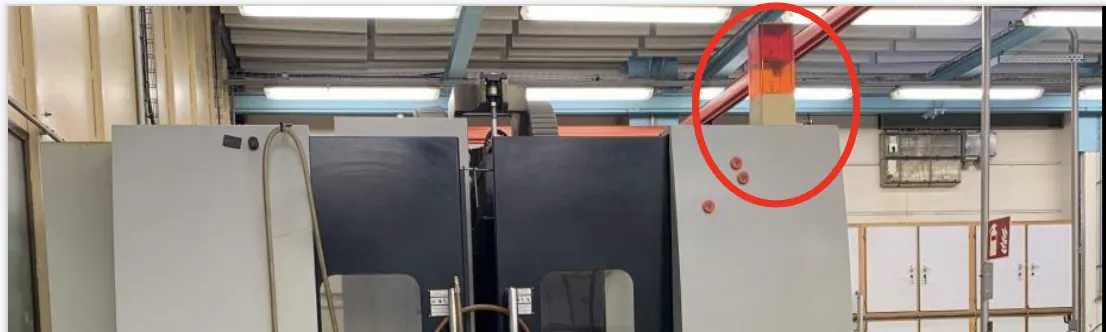
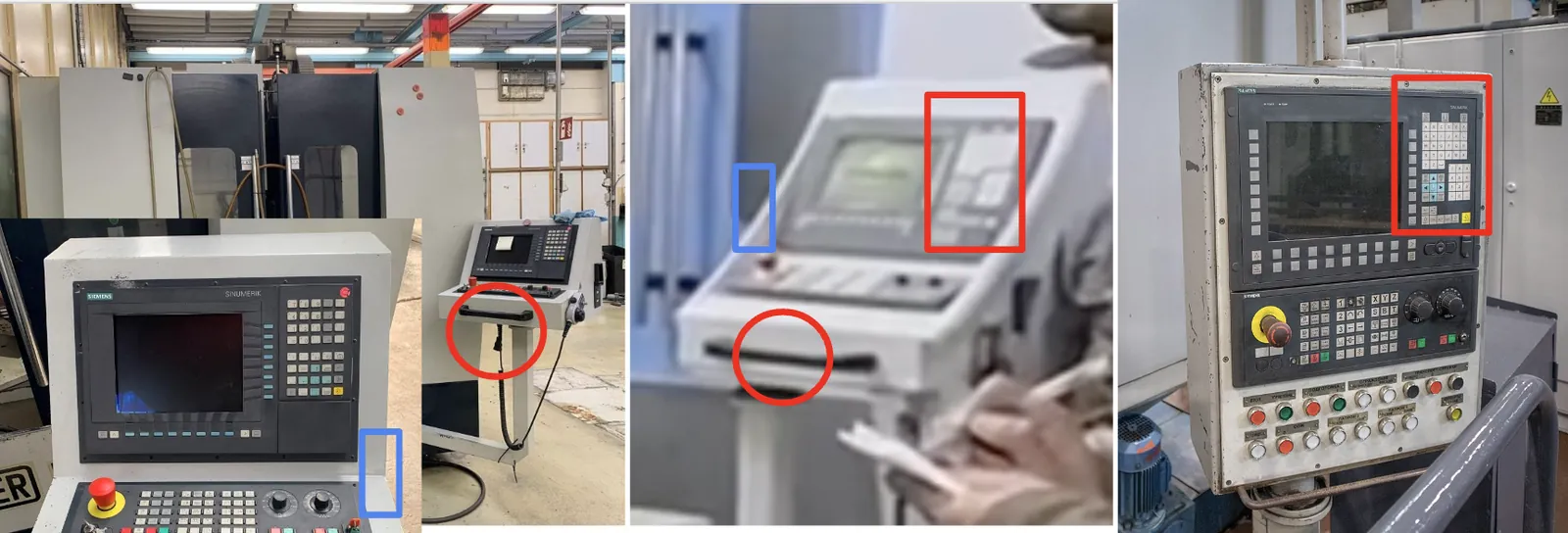
Another unique feature of this machine is its computer component that is attached to the machine through an arm that extends downwards into the bottom of the machine. Most Chinese machines have the computer component attached to a swiveling arm that extends from the upper part of the machine, and other computer components do not swivel at all. Modern computing components contain LCD monitors, however, the monitors found in the video were older, monochrome CRT monitors. This helped date the machine to the early 2000s which ultimately led to the discovery of the Spinner machine line. The unique housing was also mainly found on Spinner machines in the older MC lines. The controller is a Sinumerik D810 (OP010 configuration) that is rarely found on more modern computing units.
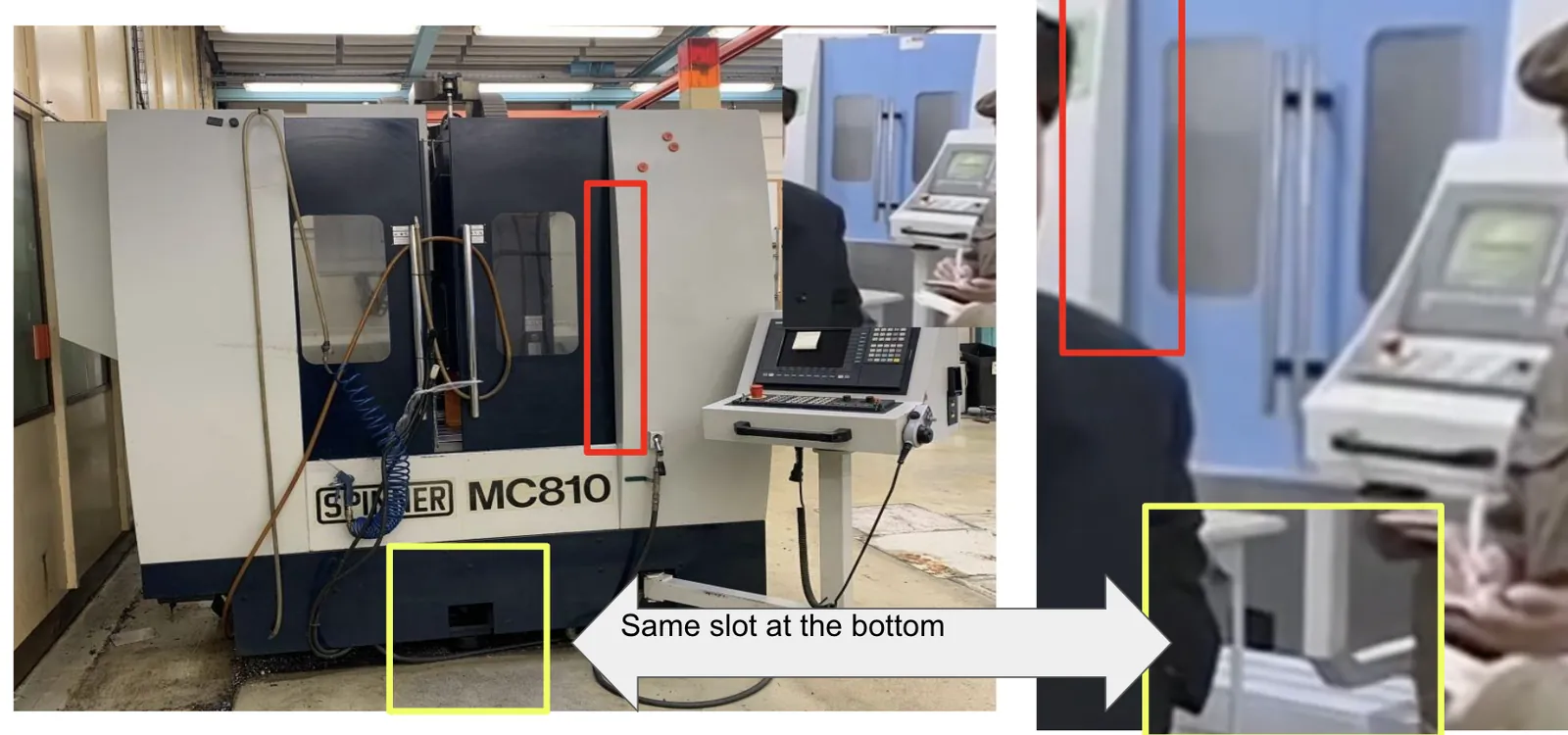
The MC machine line features many structural similarities to the machine found in the Taesung plant including a curved front, two centered doors, and a cutout at the bottom. These are marked in the image below.
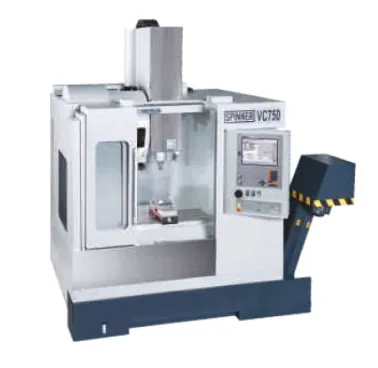
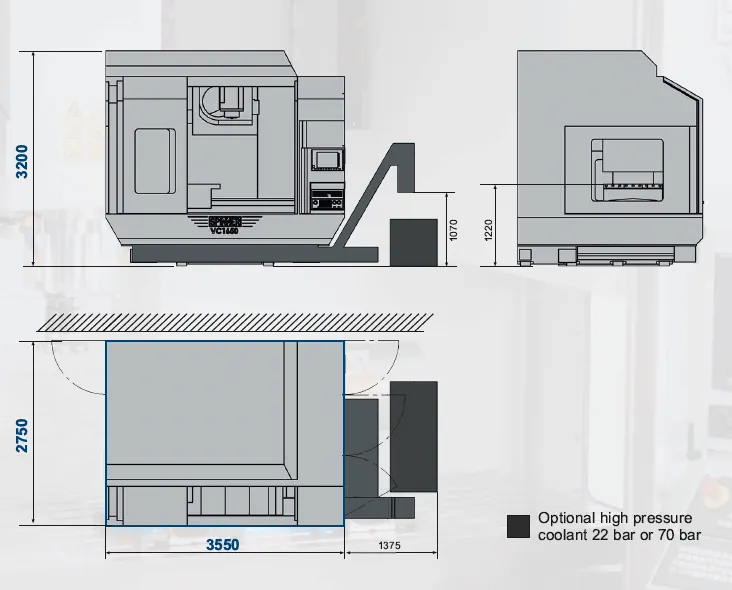
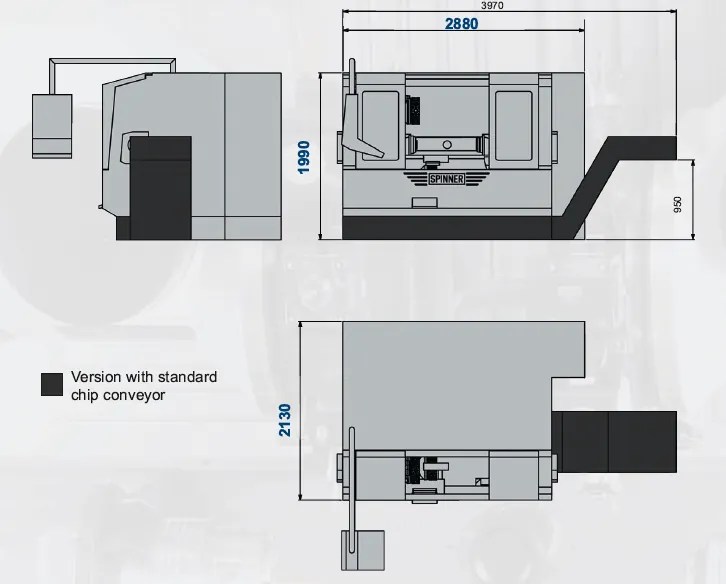
The chip collector (below on the left) is one of the possible configurations that the MC machines can take. Other configurations are listed below.

Verifying the machine
There are a few outstanding questions regarding the specifics of the Spinner machines.
To verify the initial machine that we had found (Spinner MC810) we gathered digitalized archives from 2000 to examine the machine beyond the angles provided by online pictures. This catalog however revealed the existence of two other machines in the MC line that would complicate our attempt at pinpointing the machining center found in Taesung.
Firstly, the MC line comes in three configurations: 650, 810,1020. All three machines look identical from the outside without reference. Their difference lies in their size (±16 cm), weight, and internal specifications. The 810 and 1020 machines have longer X, Y, and Z stroke lengths meaning they could machine larger pieces. These machines can also accommodate larger table loads internally than the 650. To create a more educated guess as to what machine was used, MIIS colleagues and I created a grid system using the size of the computer component as a reference as well as standardized measurements from other parts of the machine. We then mapped these out and measured the height of the machine and got a figure that accurately identified the machine as a Spinner MC650.
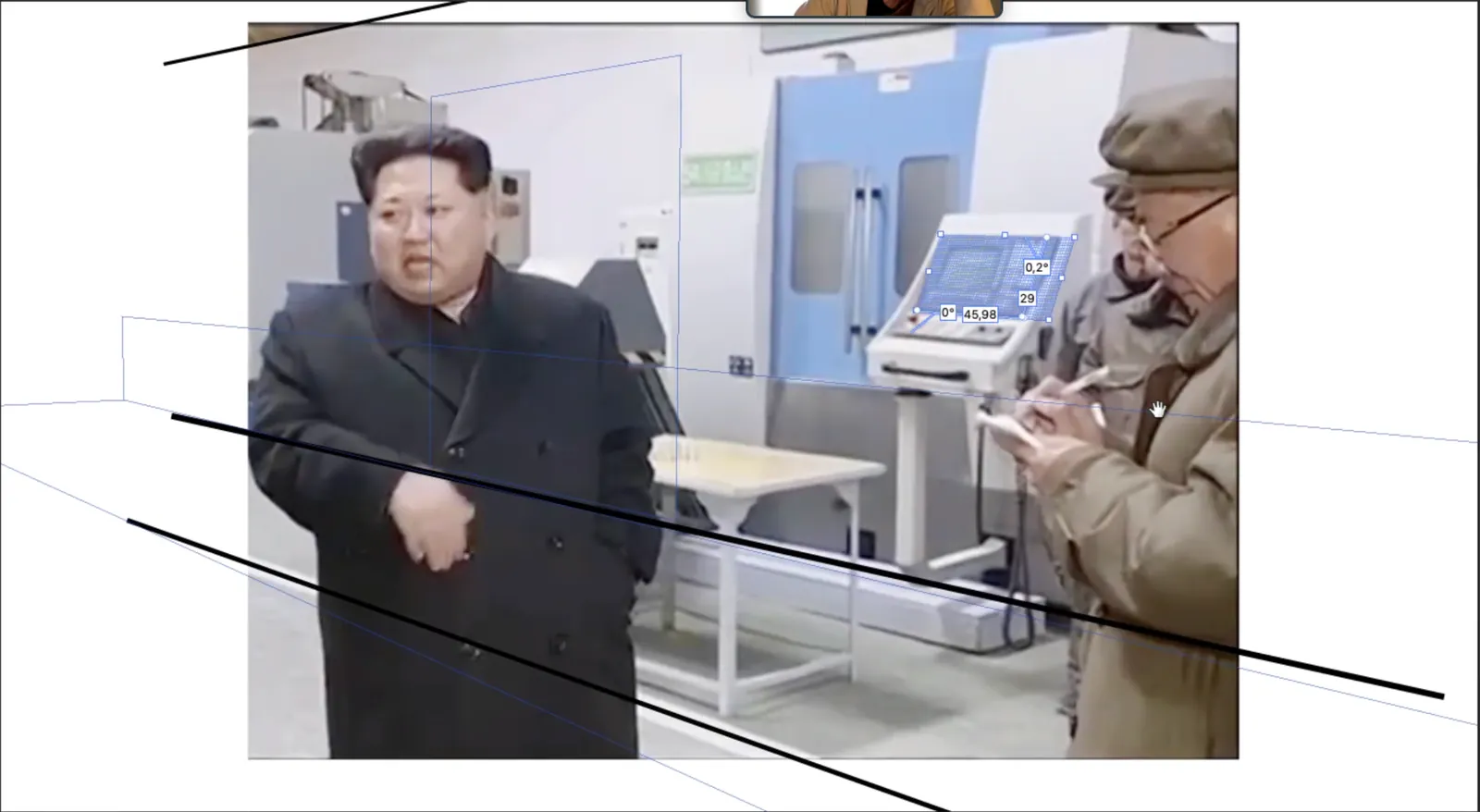
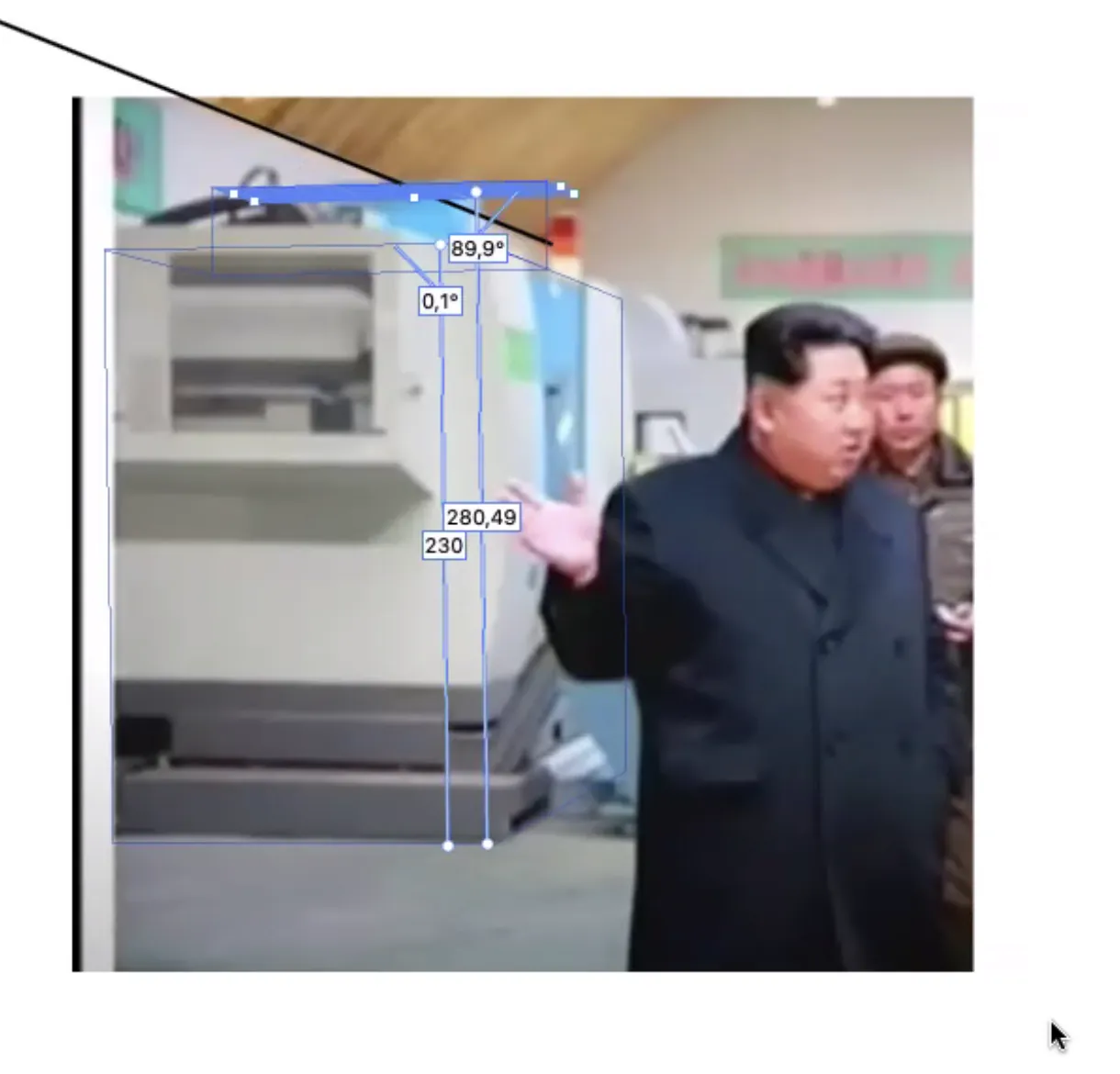
Knowing we had created a working measurement system we began to take further measurements to assess whether or not our original grid held up at different angles. Preliminary measurements continued to line up with the design specifications of a 650 machine. To confirm this, we created a 3D model of the machine in Blender and looked at the difference in size between the different models to better understand whether or not there would a noticeable difference from the machine in the video.
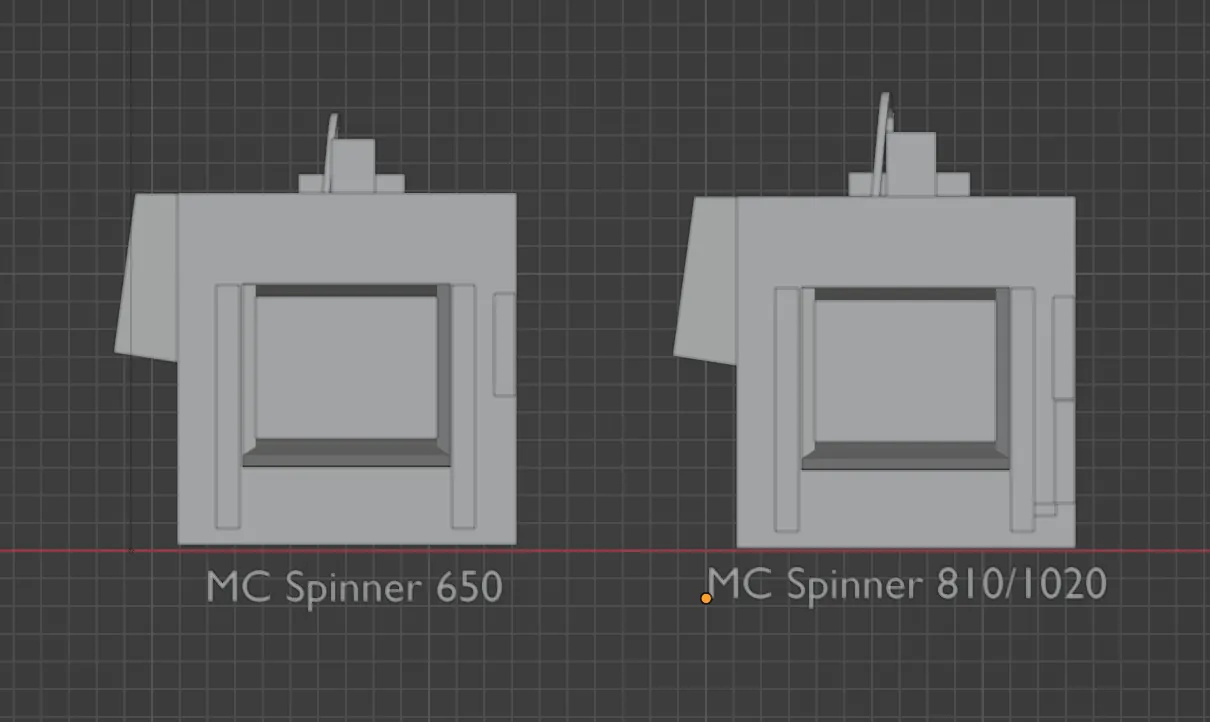
The minimal size difference makes it difficult to make a concrete assertion on the machine in question. However, because the difference in measurements does not encompass the whole of the machine but only the upper section, we may infer that our initial measurements were accurate and that the machine from the video is an MC Spinner 650. Further inductive proof exists in studying the side profile of the machine.

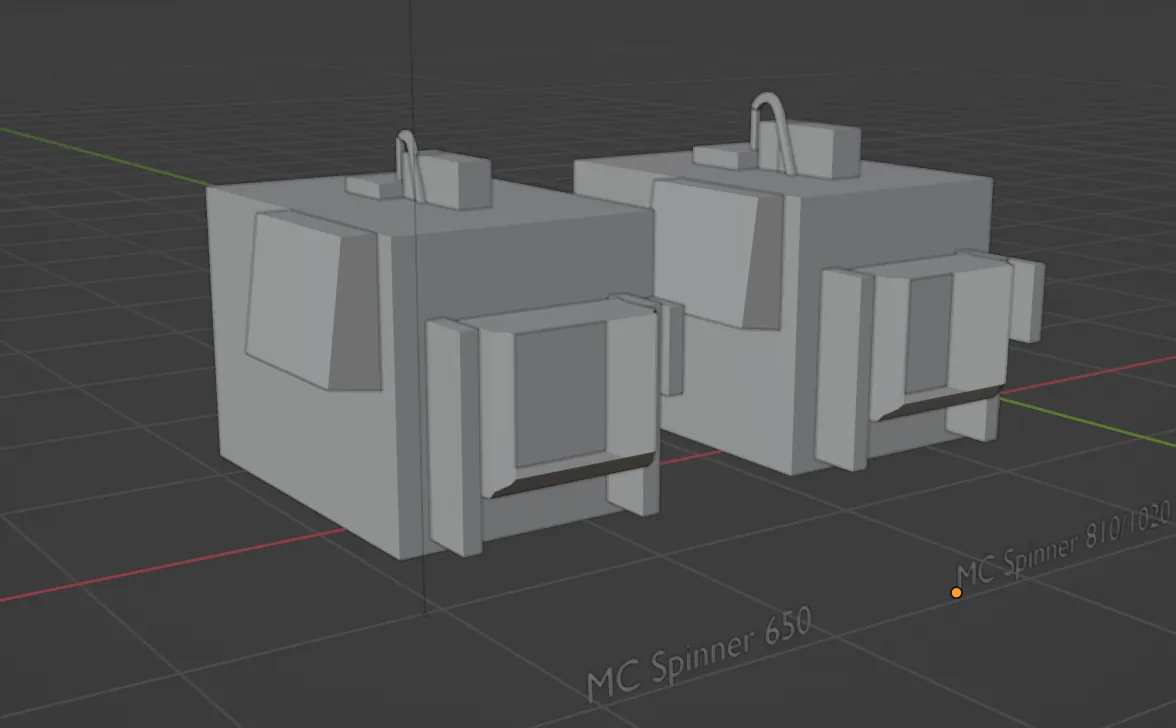
The Z-axis module and the belt are not as tall as one might otherwise see on an 810/1020 model. Proportionally, they lay lower down to the machining center and the belt itself also creates a lower arch due to its smaller size. While there is still uncertainty, it is extremely difficult to pinpoint which specific machine model from the MC line the DPRK possesses without measuring the machine then and there.
Thirdly, the DPRK has purchased knockoff versions of machines and therefore, while the machine in question may resemble an MC Spinner, it may not be one. This means that the actual machining center could have different specifications and capabilities than its original counterpart. However, I have failed to find replicas of the Spinner lines and it seems more probable that the machine was purchased at one of the Chinese expos held in the mid-2000s.