Quantitative modeling allows us to better understand the capabilities of a missile. The process of constructing a model relies on the blending of theoretical rocket mechanics and real-world data. We can access this data through a variety of means including geolocation and image processing tools. By integrating these findings into simulators and applying an iterative process of adjustments, we can come closer to understanding the design philosophy, constraints, and innovations of foreign missiles.
IRANIAN MISSILES
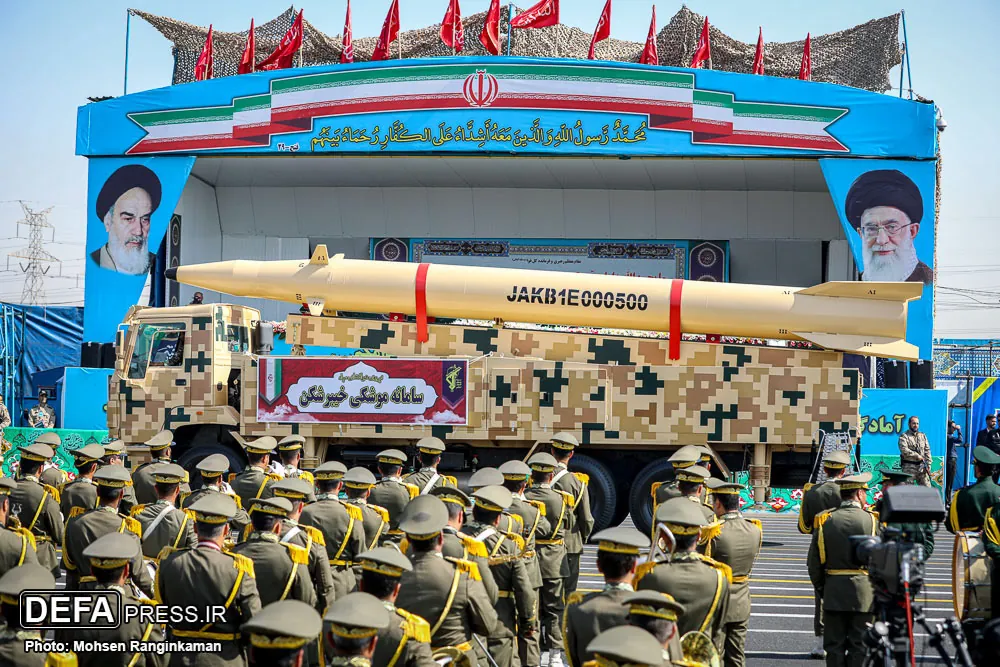
Kheibar Shekan
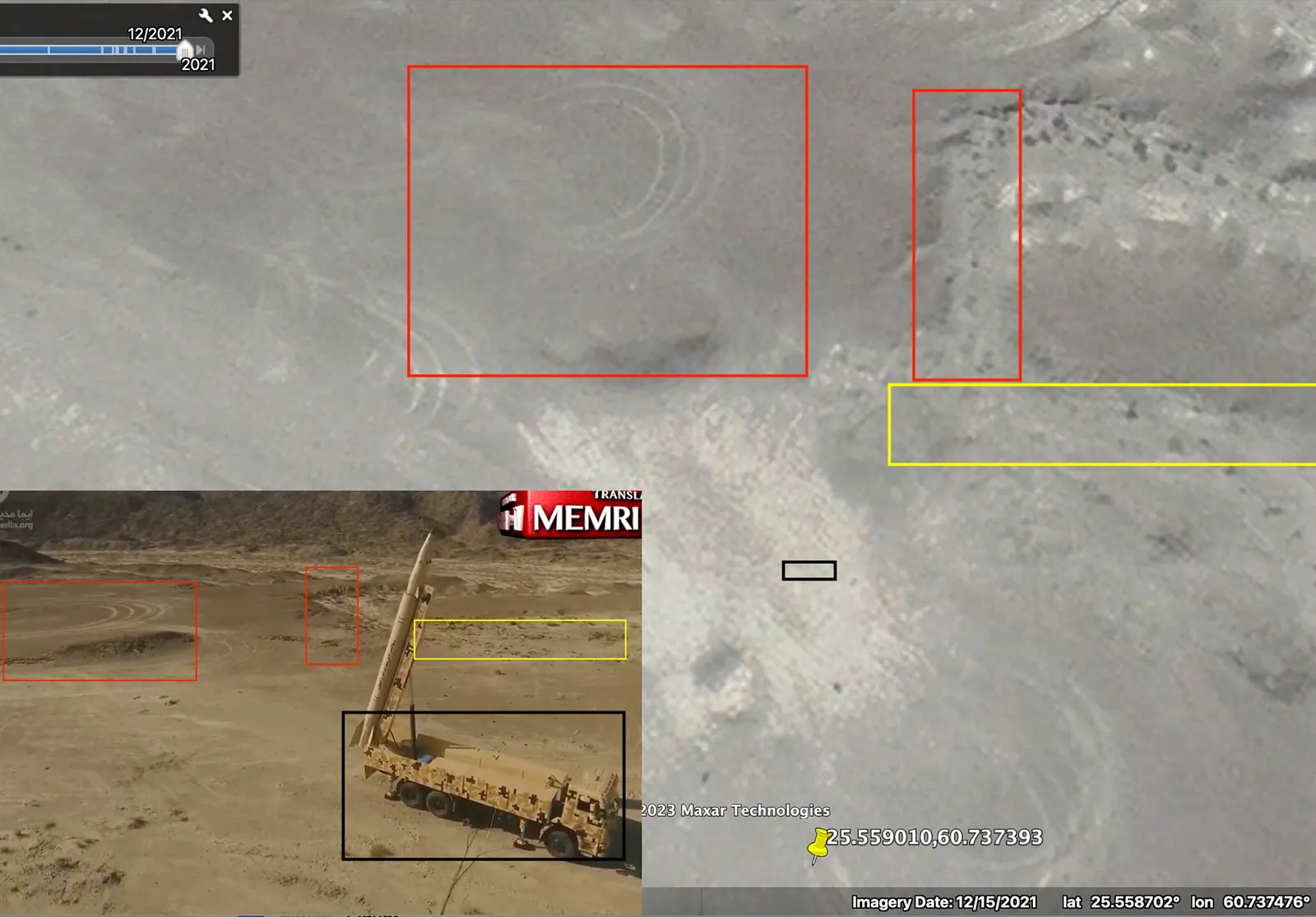
STEP 1: DATA COLLECTION
This step includes finding all available media of launches, exhibitions, and parades, as well as transcripts from officials that might give us hints about its capabilities.
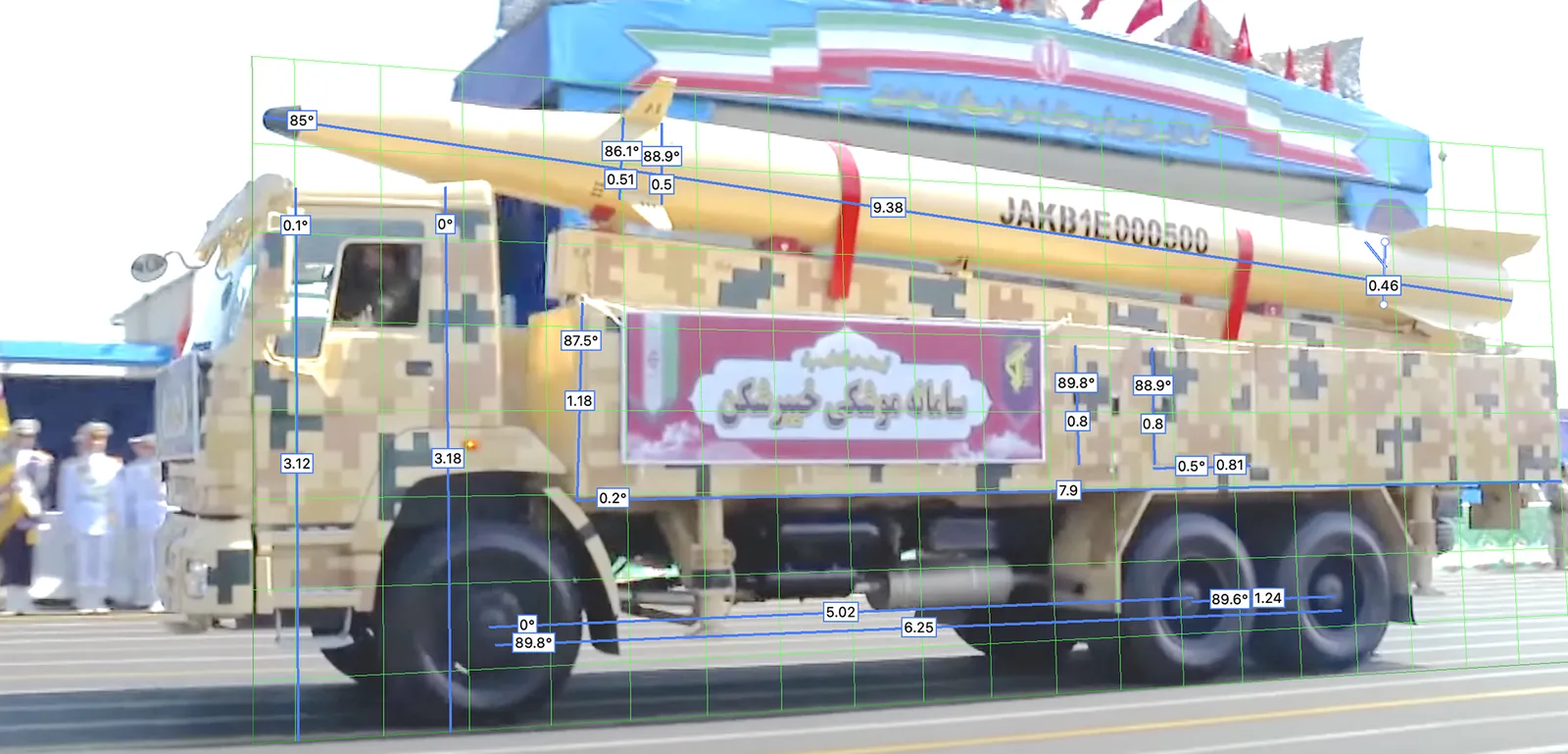
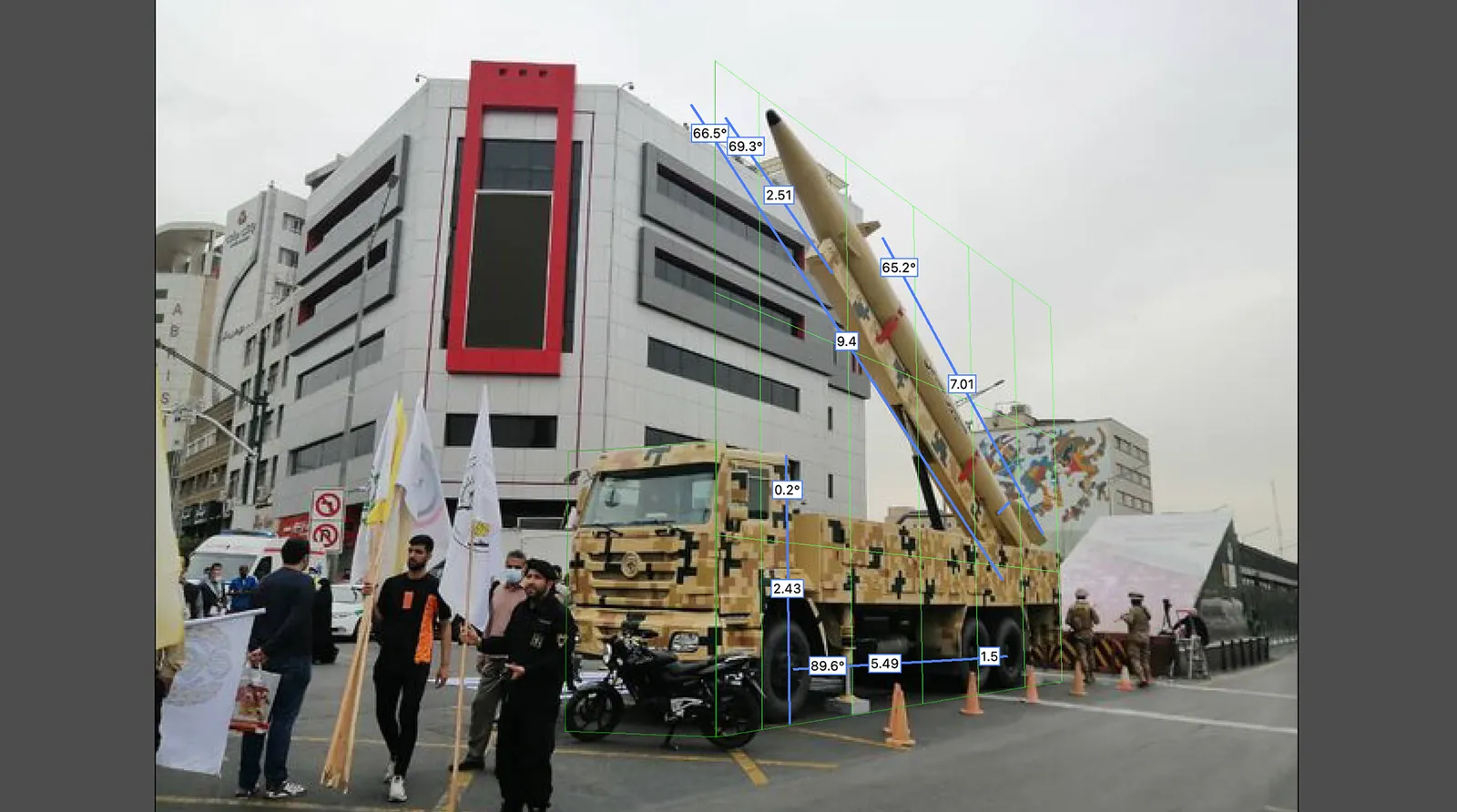
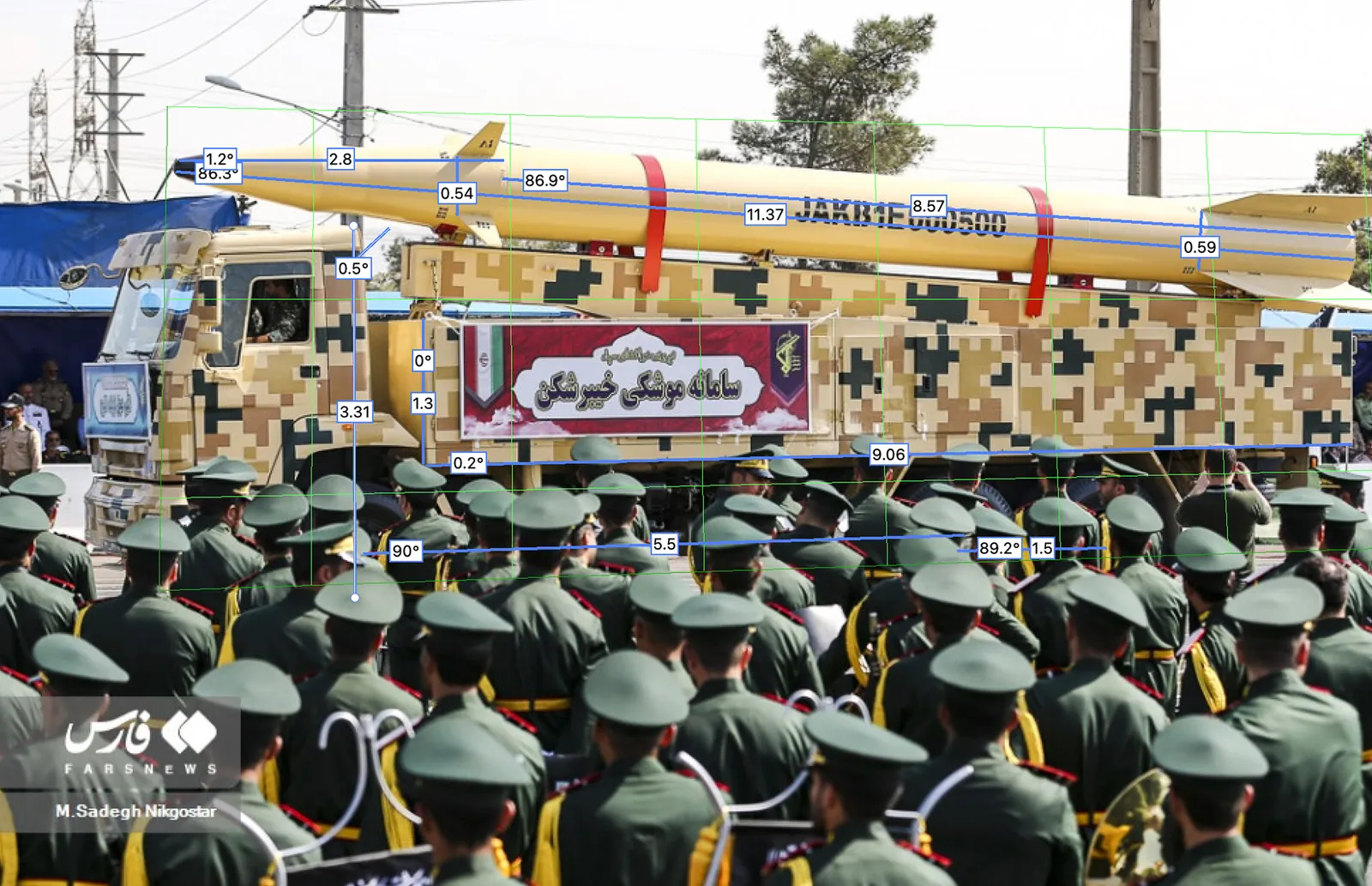
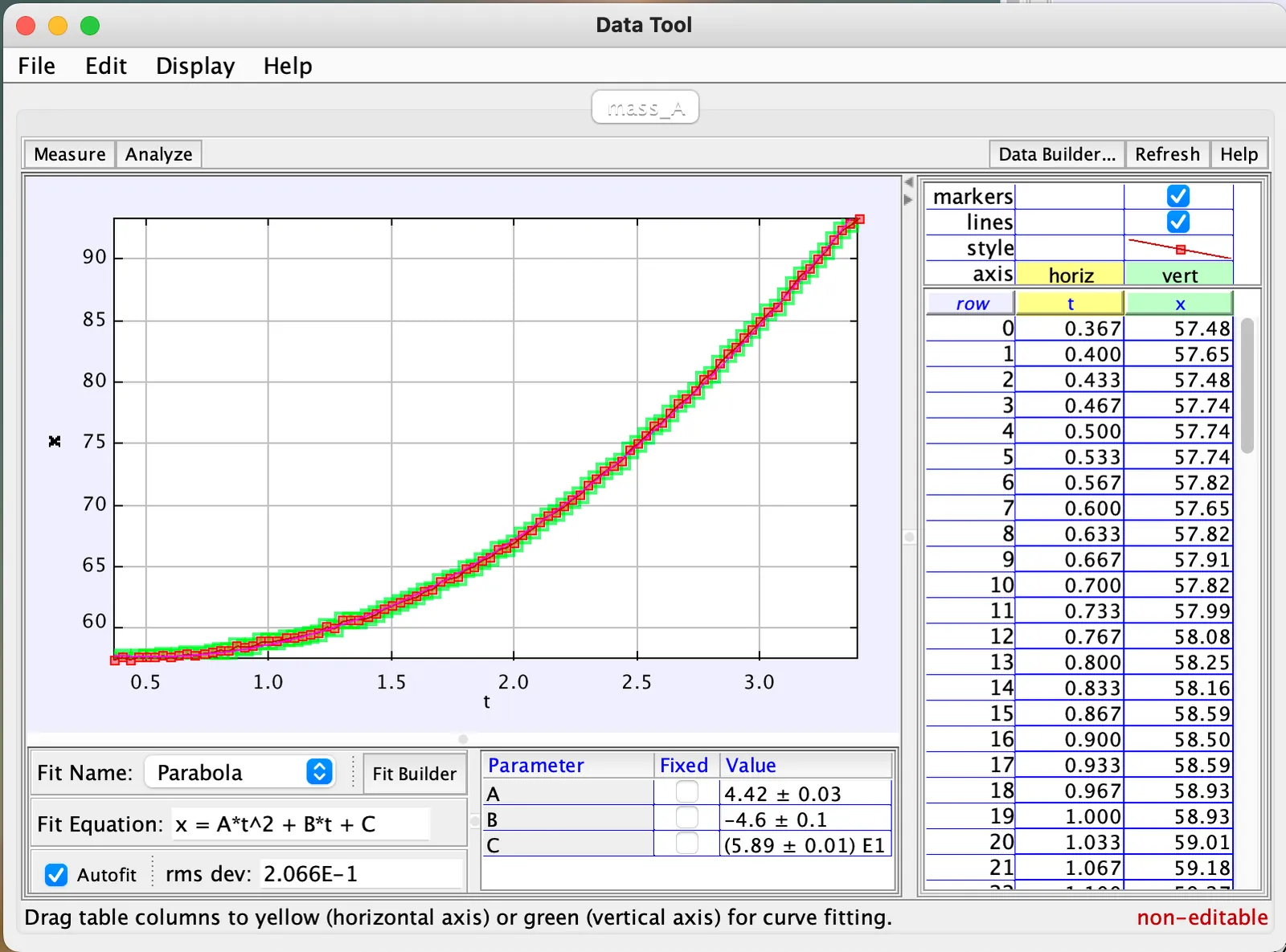
STEP 2: MEASUREMENTS
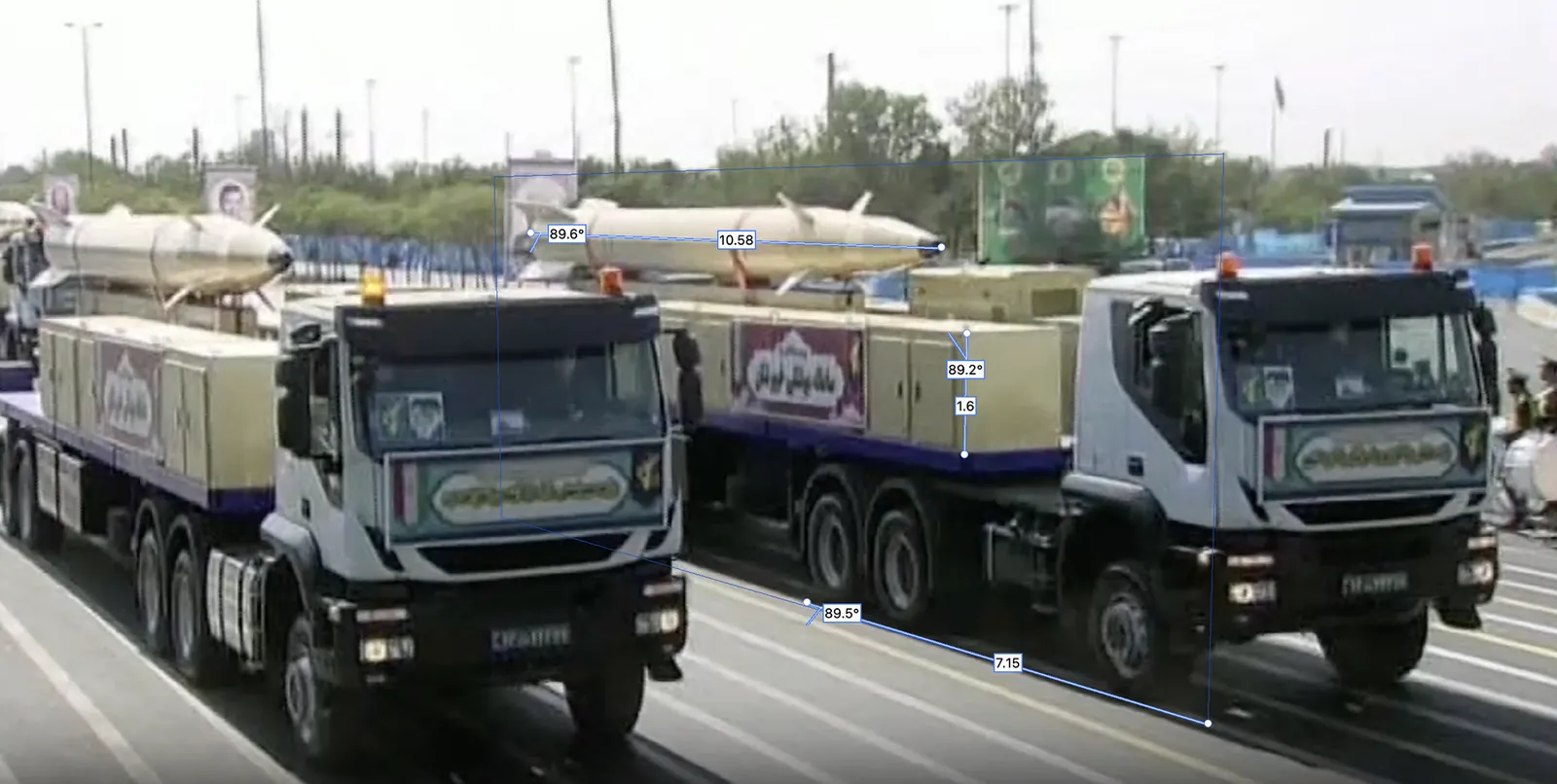
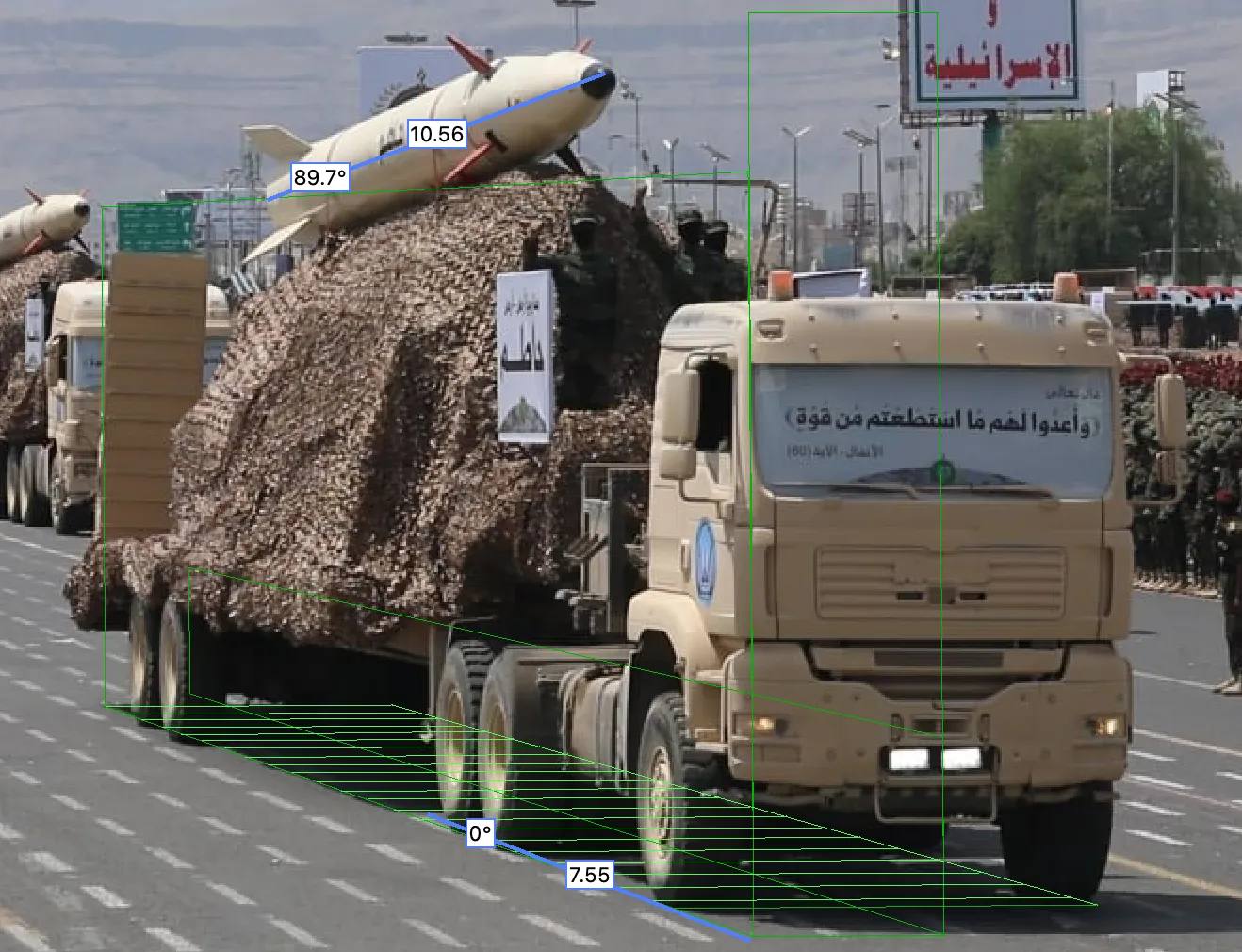
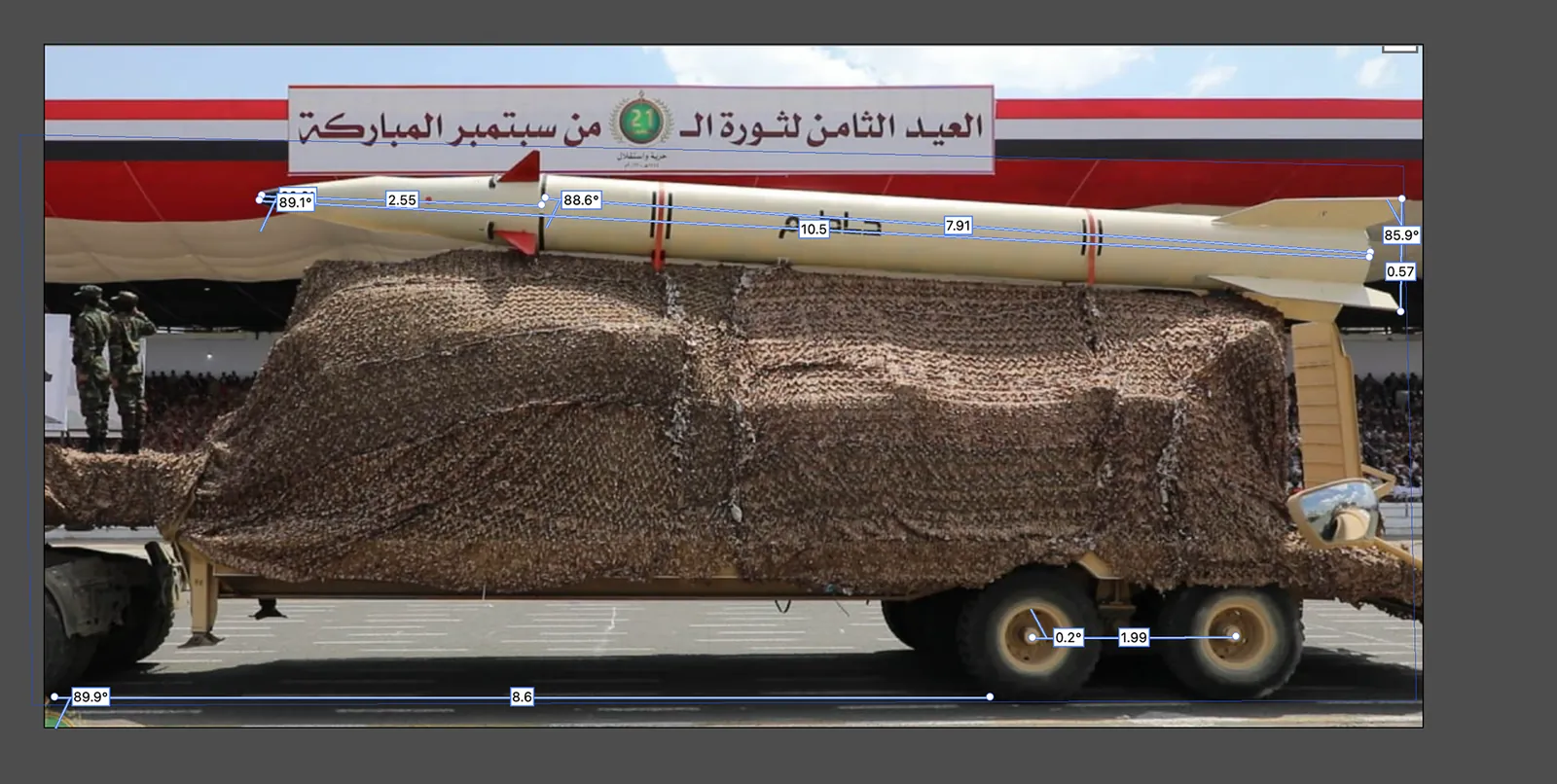
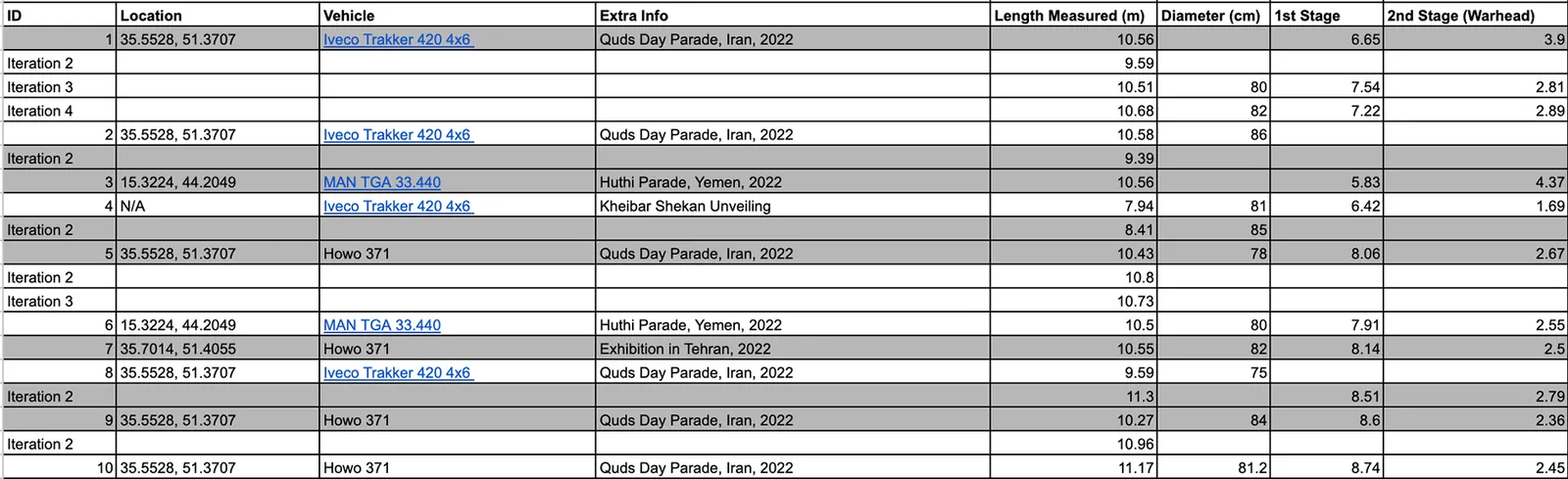
The process of measuring these missiles relies on knowing the dimensions of a real-world item within the picture. These could include the dimensions of a truck, road markings, people, or buildings. Using these, once can create 3-dimensional grids that give us the ability to measure items while taking depth and angles into account. By taking multiple measurements and using different items as scales, one can eventually average out the dimensions of the missile.
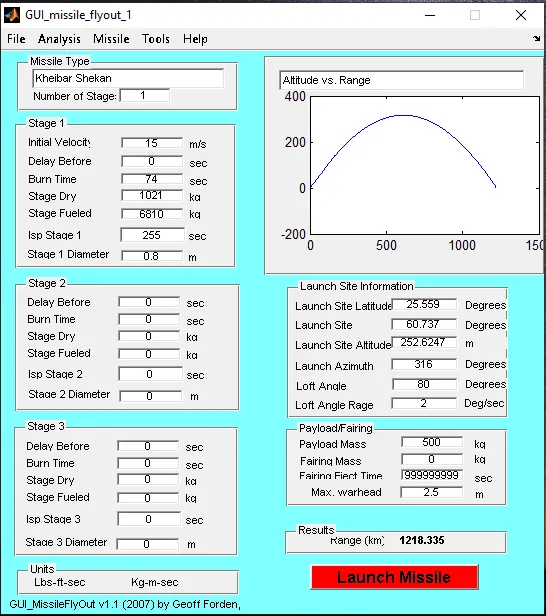
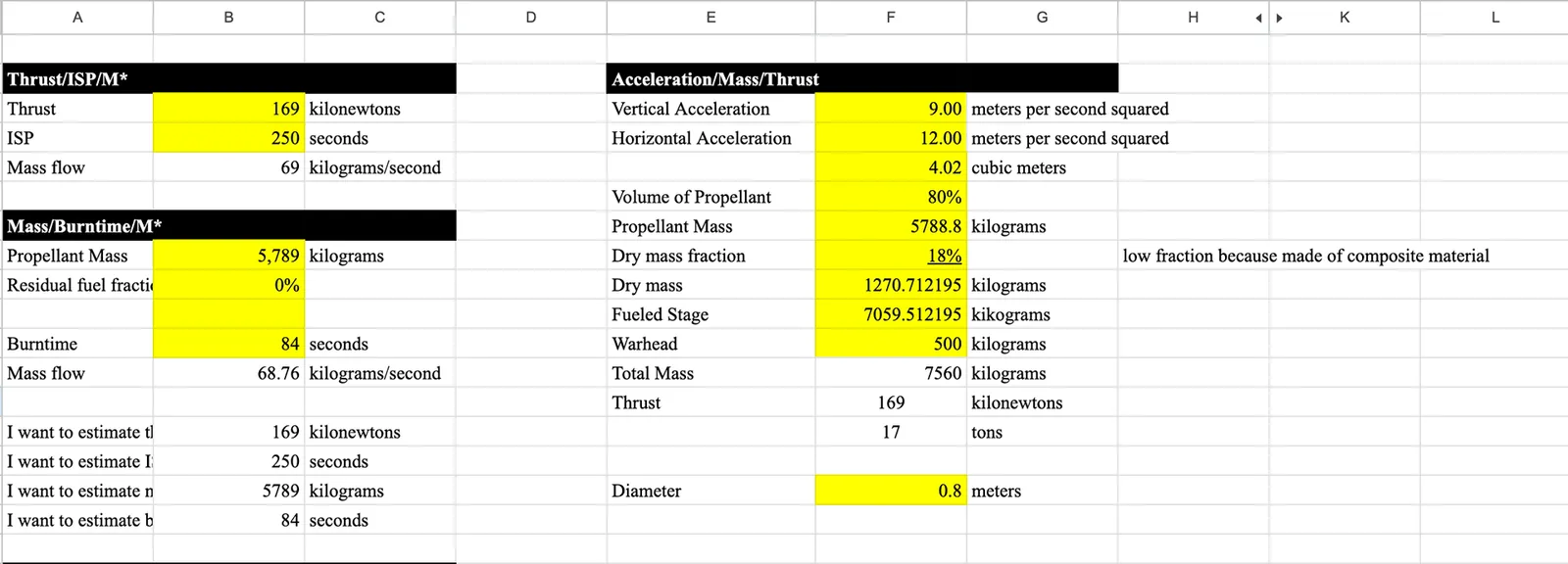
STEP 3: MODELING
Using the information we have gathered we can begin to create a model of the missile including its weight, thrust, and acceleration.
Fattah
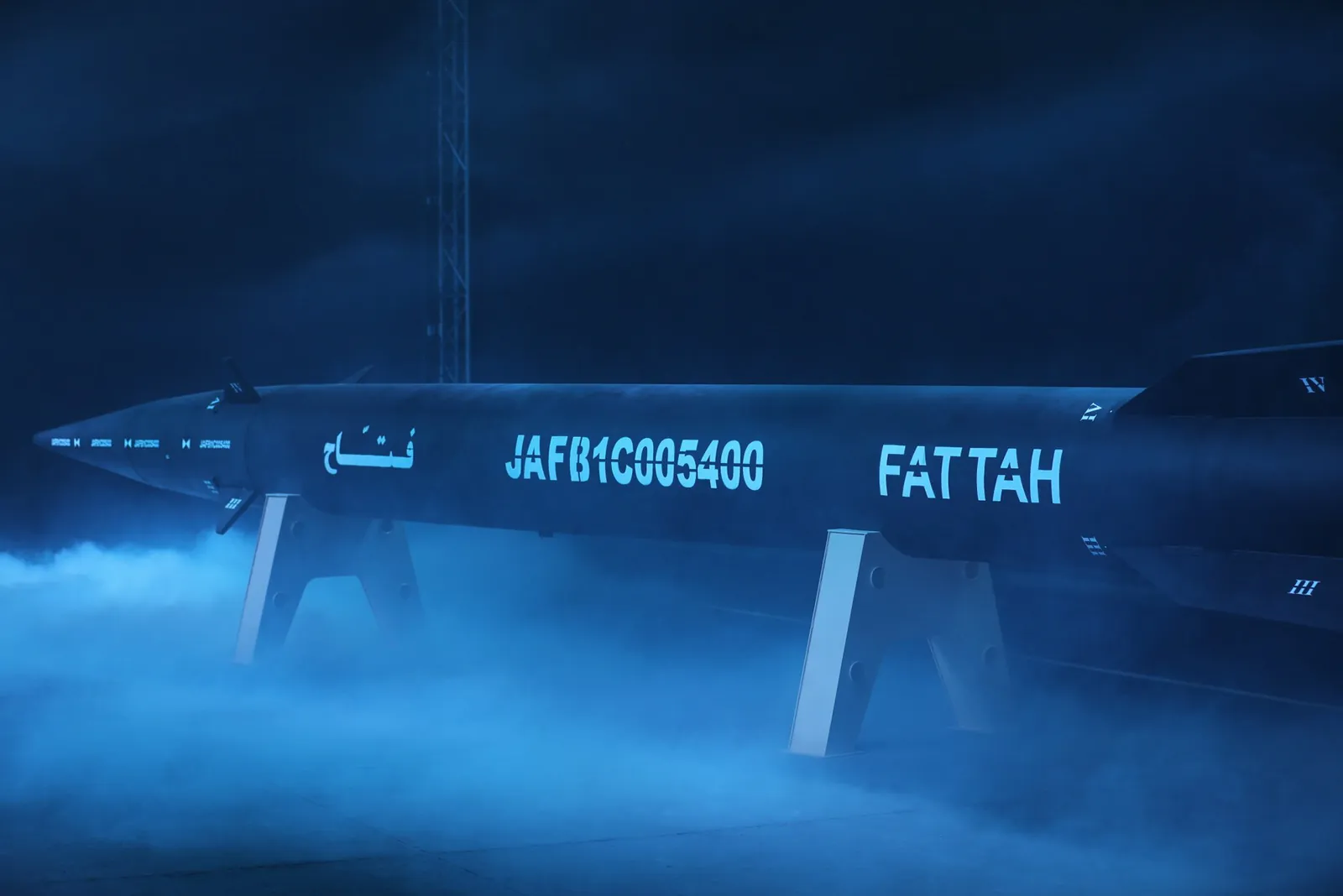
Step 1: Data Collection
Step 2: Measurements
We know the Fattah and the Kheibar Shekan share a first stage from visual confirmation, as well as the language used by Iranian officials describing the Kheibar Shekan as the Fattah's predecessor.
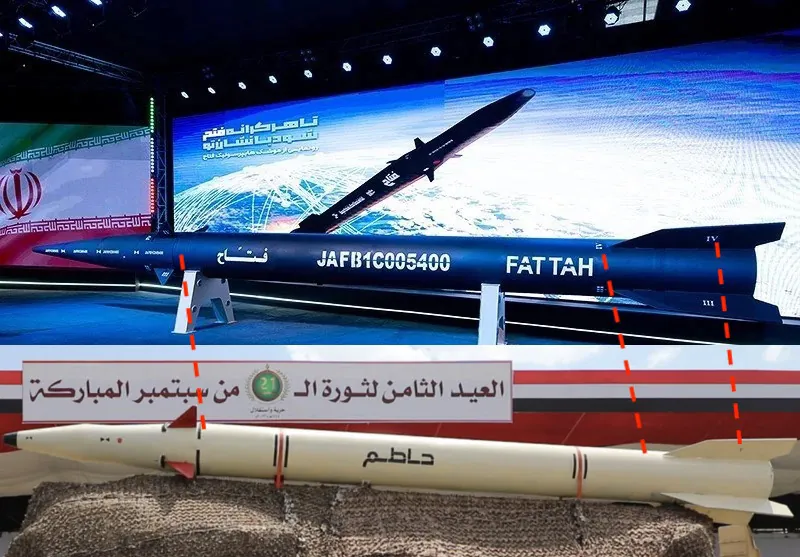
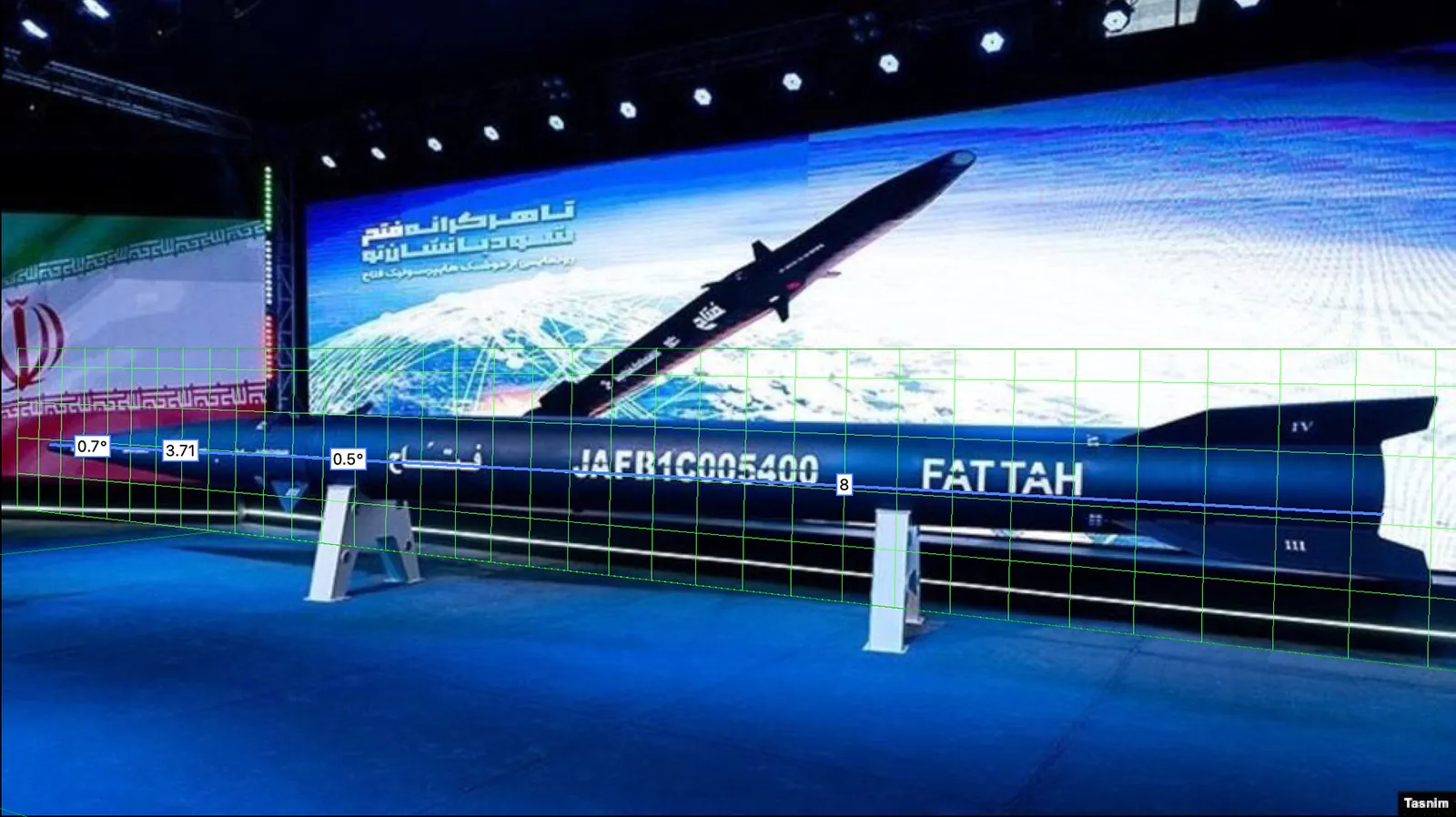
By assuming the same first stage, we can estimate the diameter of the missile to be approximately 80 cm. Thus we may derive further measurements of the missile such as the second stage which has been modified.
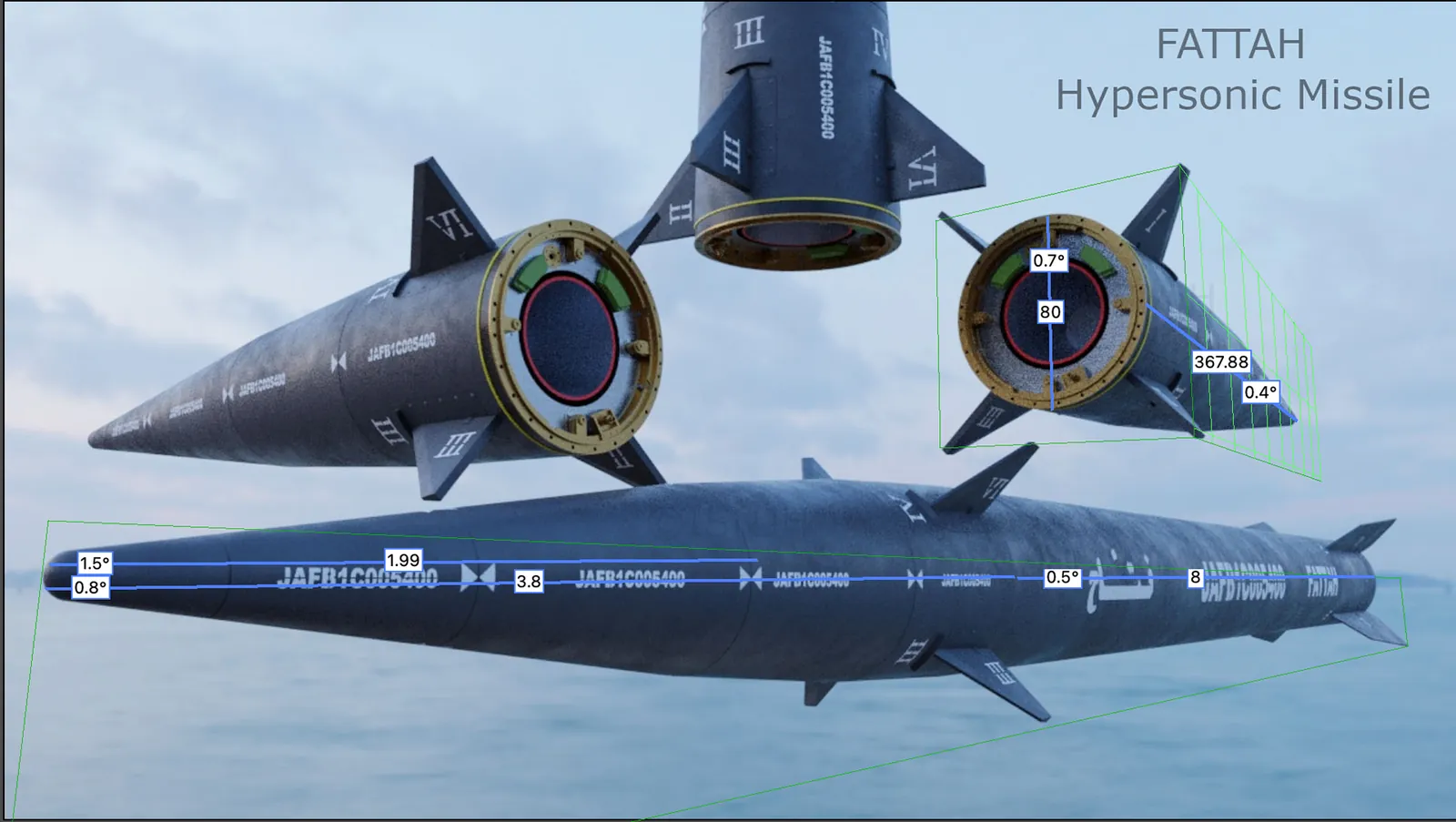
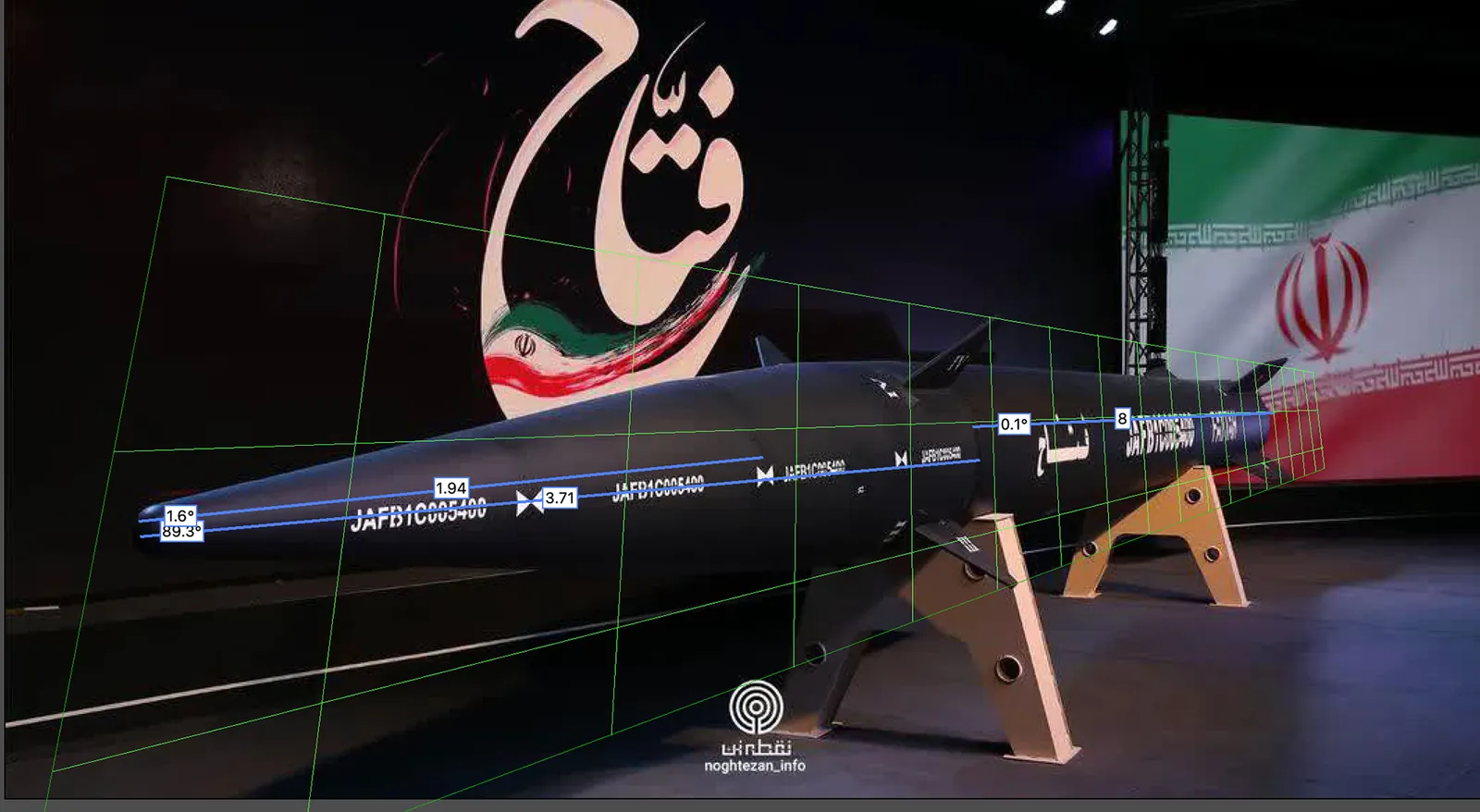
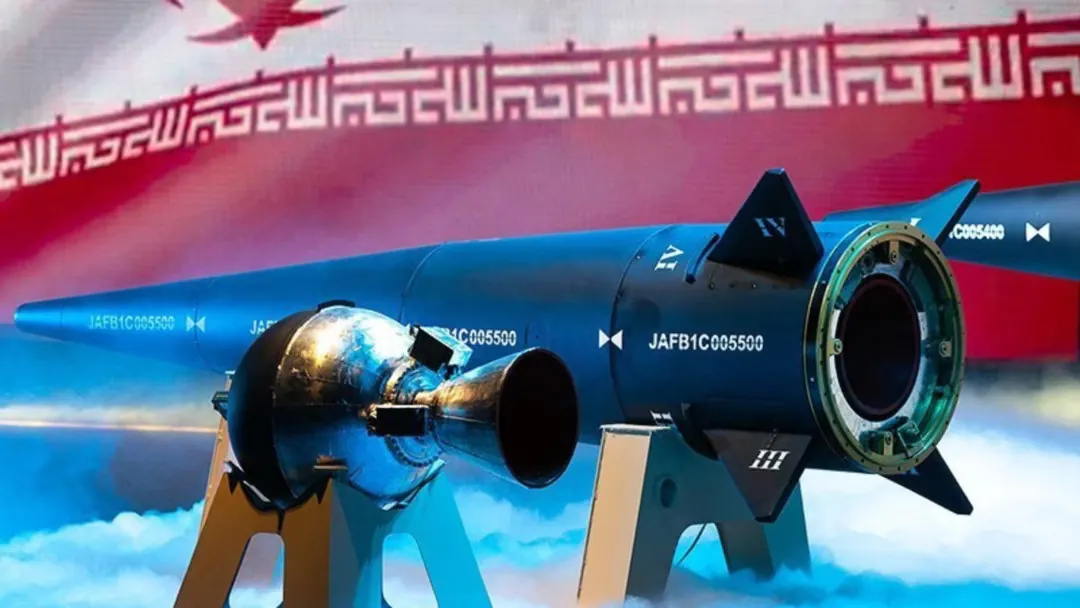
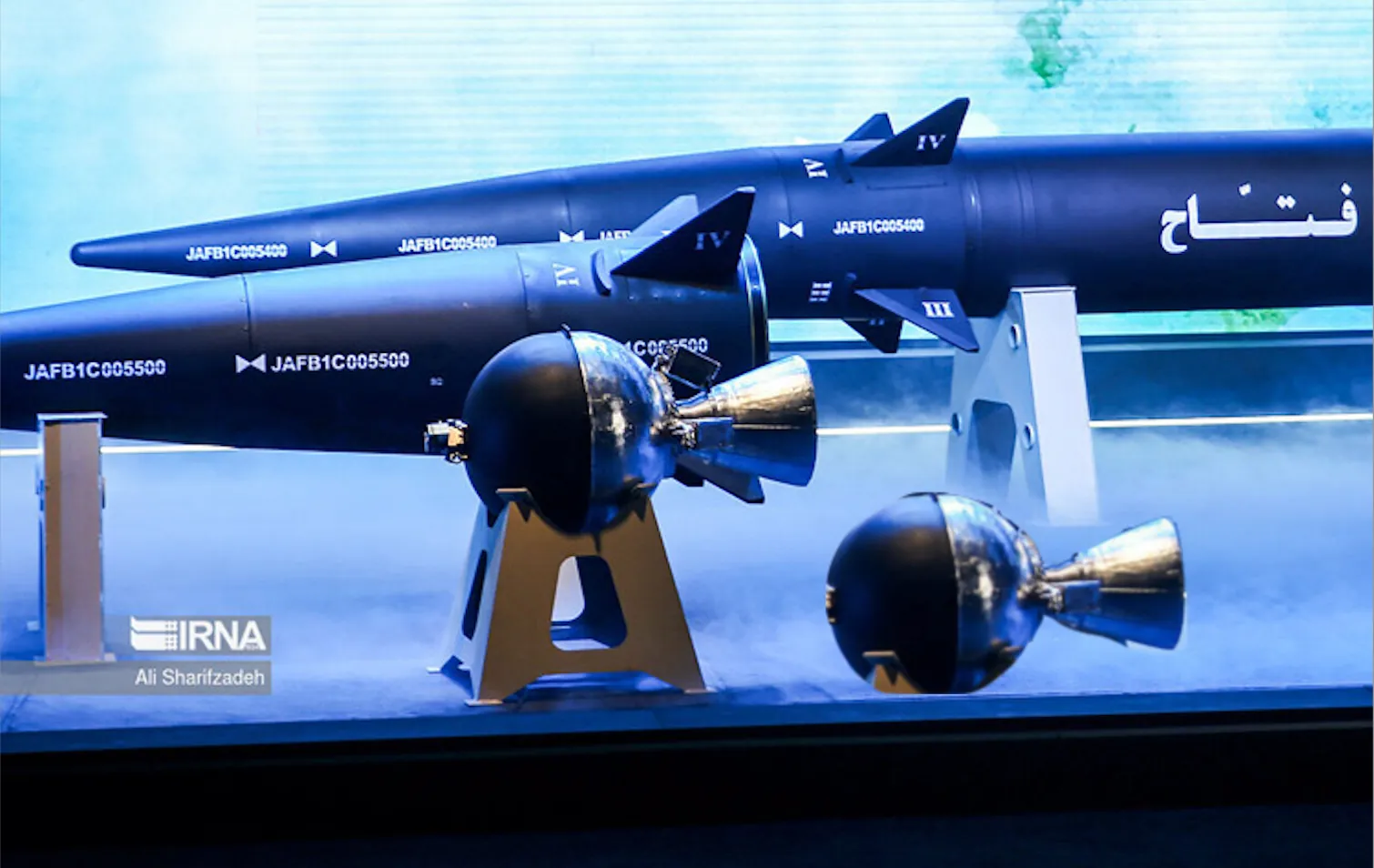
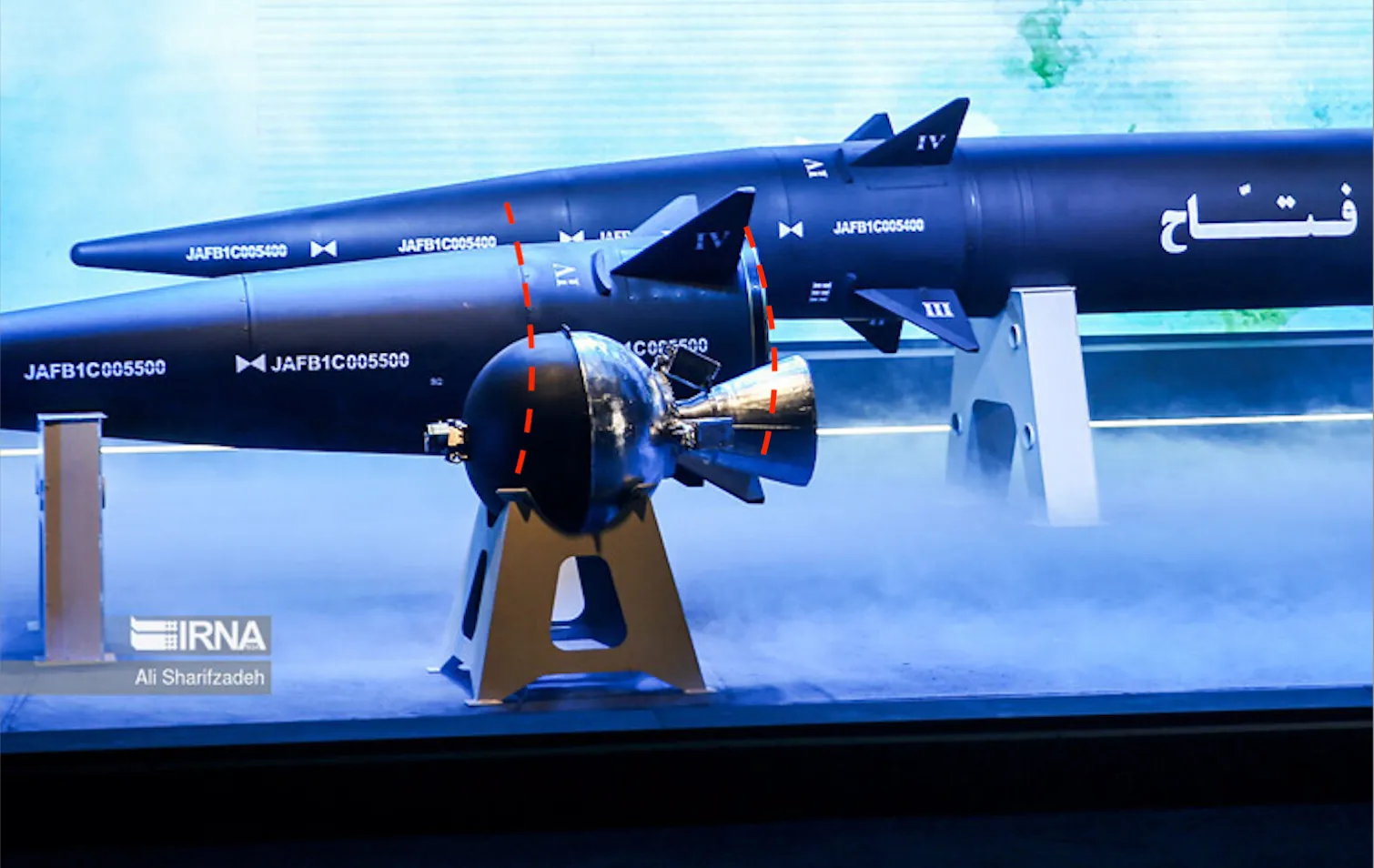
To better understand the capabilities of the maneuverable reentry vehicle (MaRV), we need to examine the motor itself. Luckily, the Iranians showed us the second stage separately, with the motor taken out for display purposes.
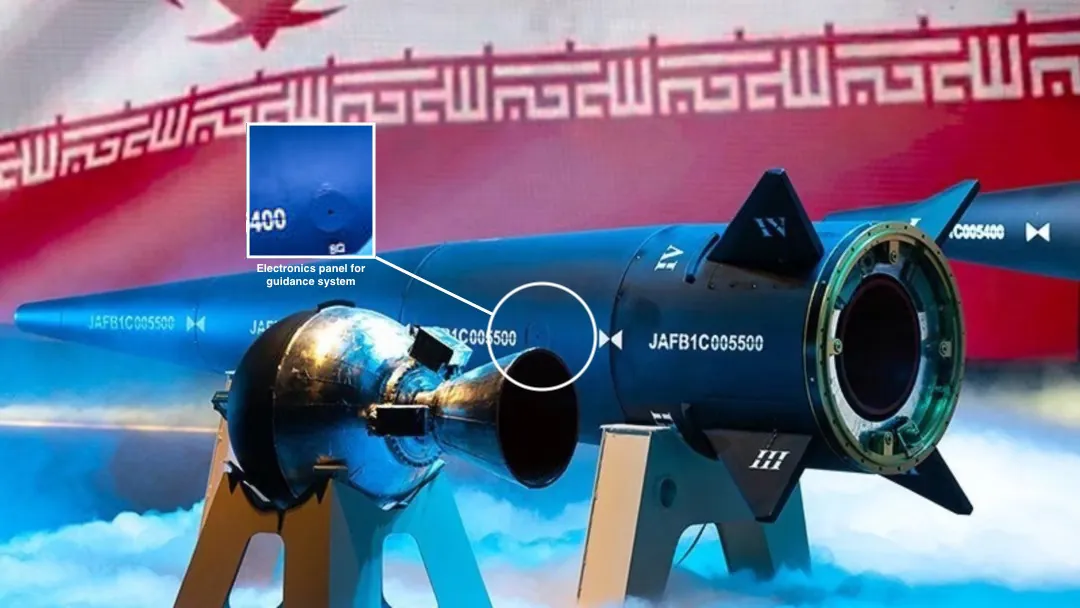
Visually, we can identify this motor as an Arash-24; which is the same motor used to power the Saman-1 rocket. The capabilities of this motor as also publically available, including thrust, burn time, fueled weight, and dry weight.
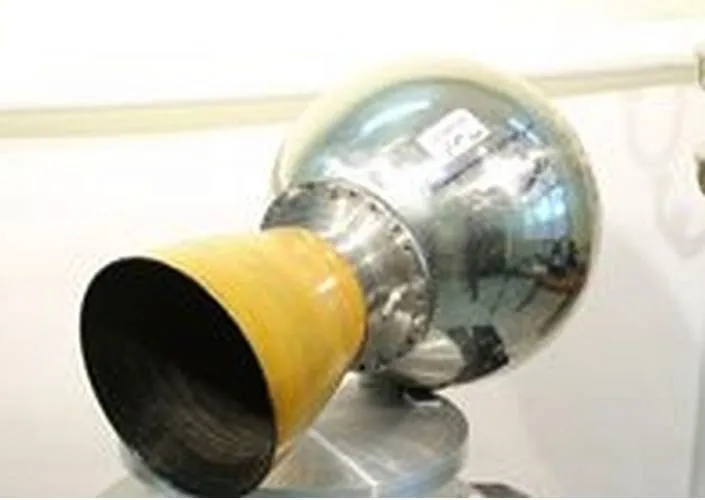
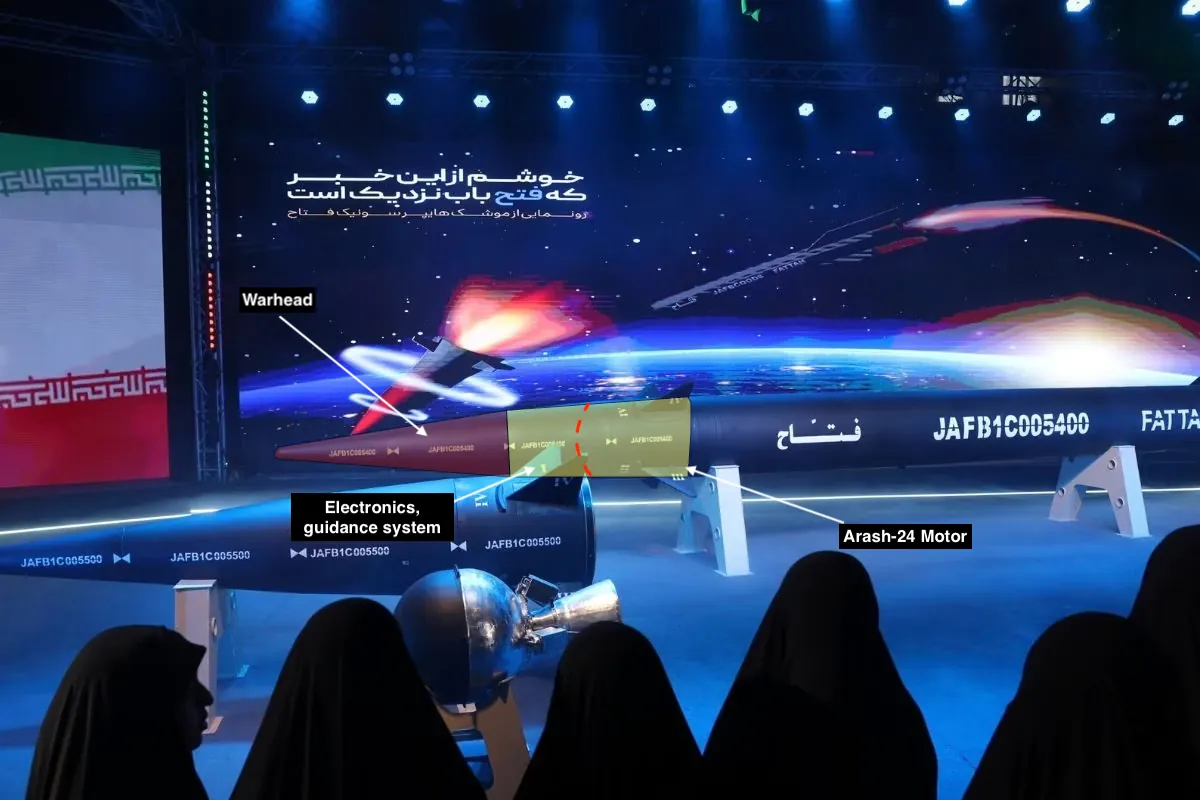
The question then becomes the overall weight of the second stage. While we know the weight of the motor, what percentile does this make up of the total weight? To answer this, we must understand how much space the motor takes up in the MaRV.
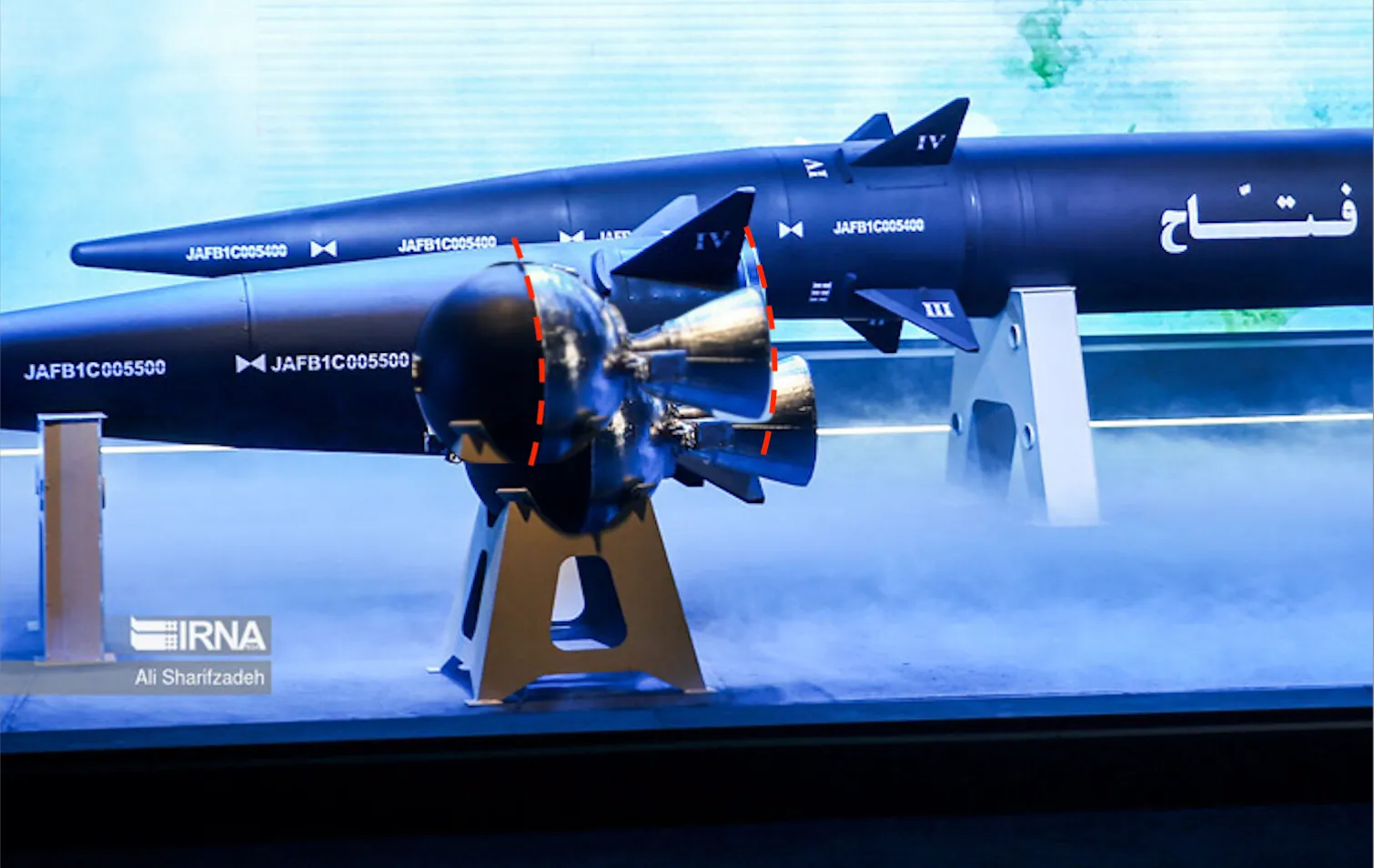
Given that the motor is the same inside and outside the second stage, we can make a copy of it and align it to the nozzle to get an estimate for how far inside the missile the Arash-24 reaches. As we see, it seems to cross the first seam along the body.
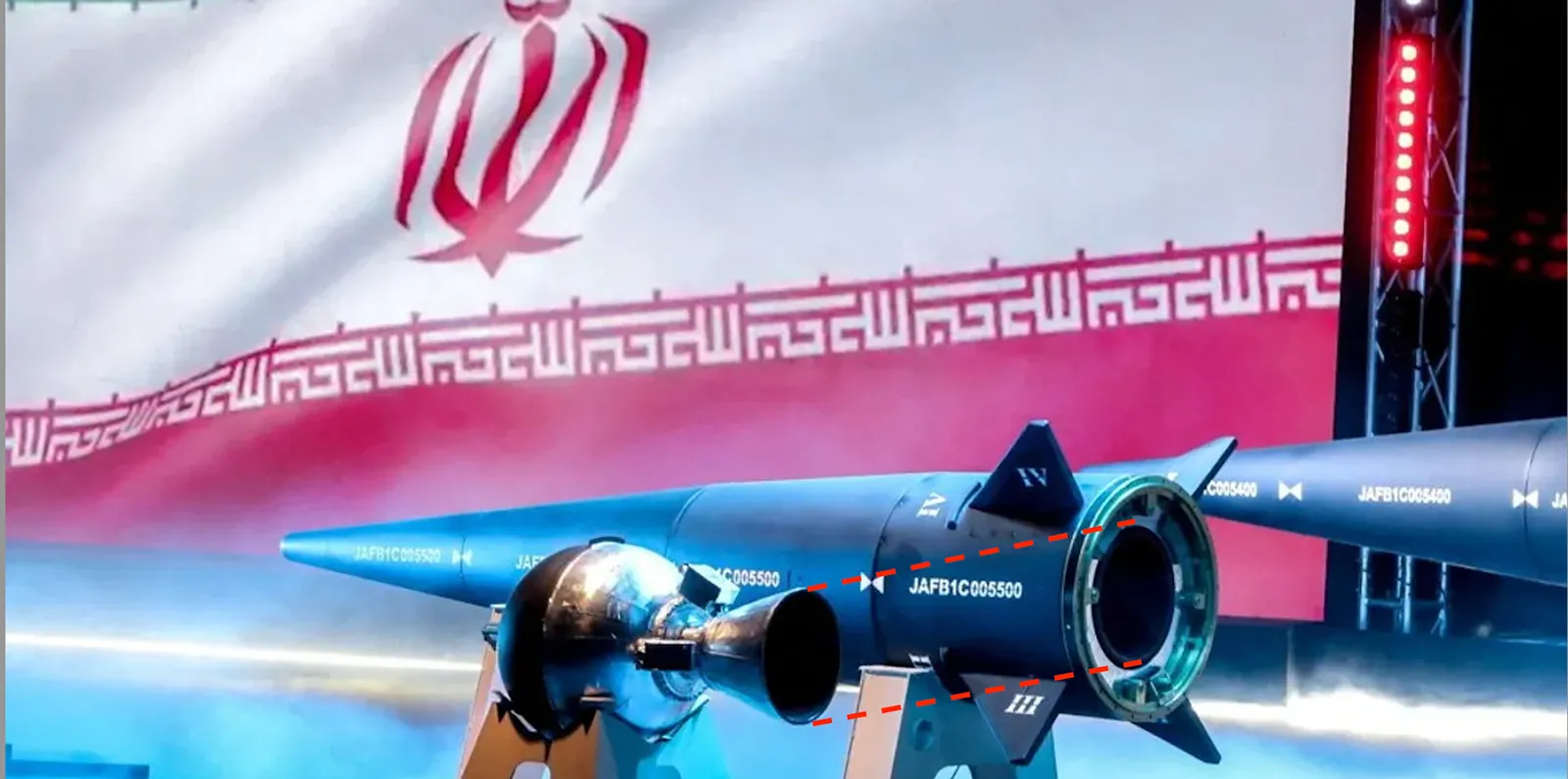
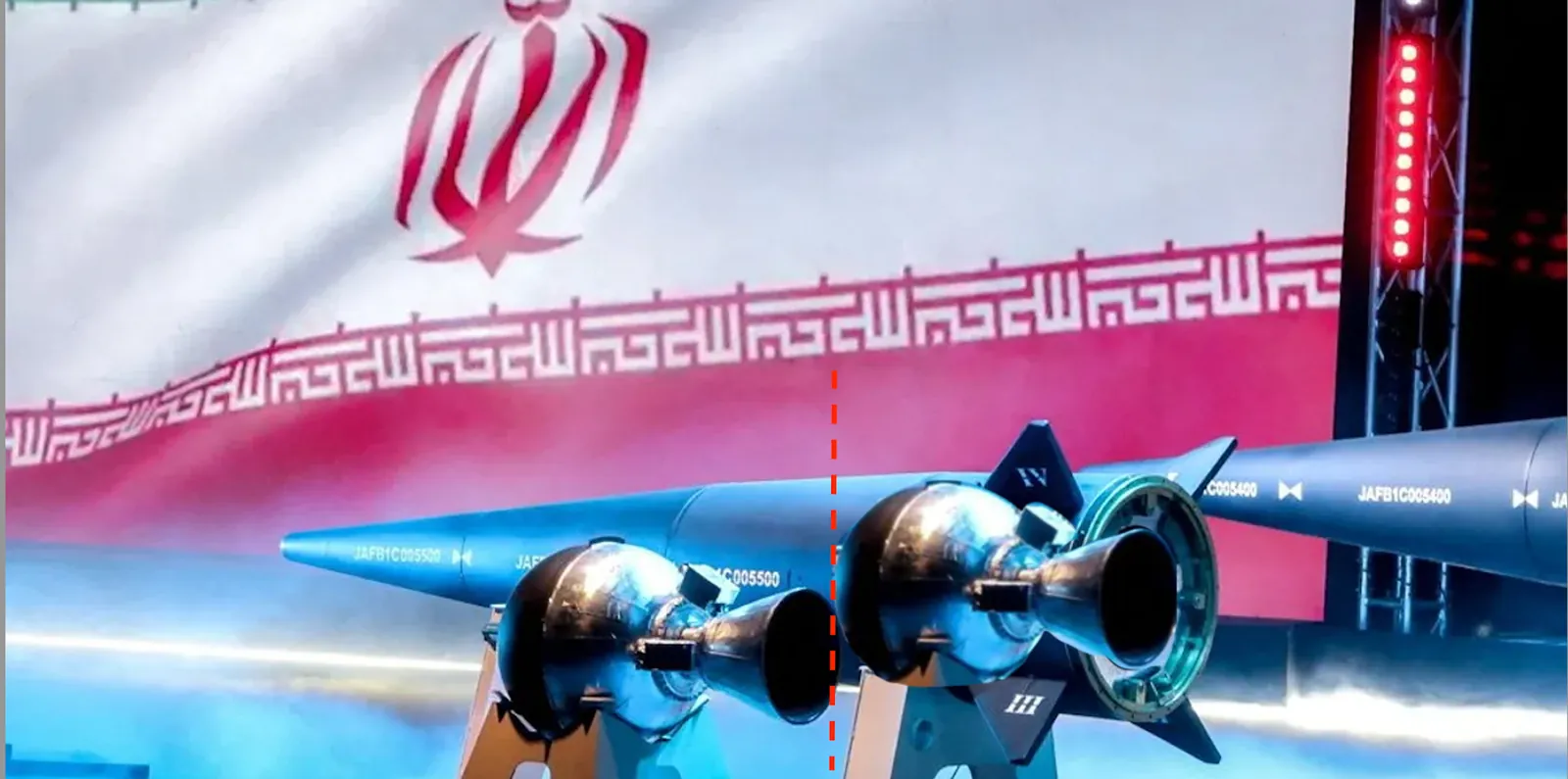
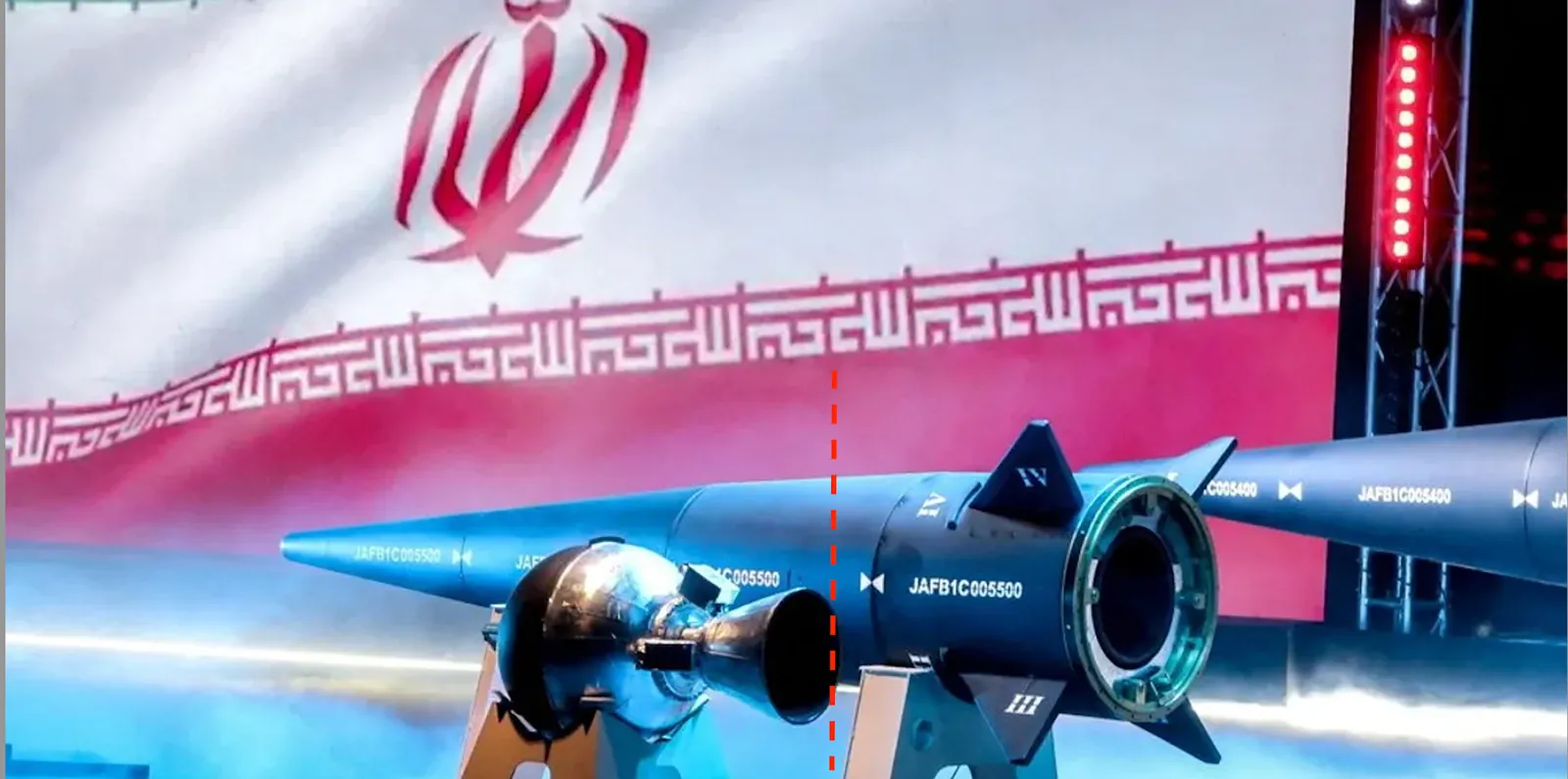
This explanation might further be supported by the fact that the dome structure used to store the grain is divided into two parts. When lining up the nozzles of the Arash-24, we can visually confirm that this seam aligns with the seam along the body of the MaRV.
STEP 3: Modeling
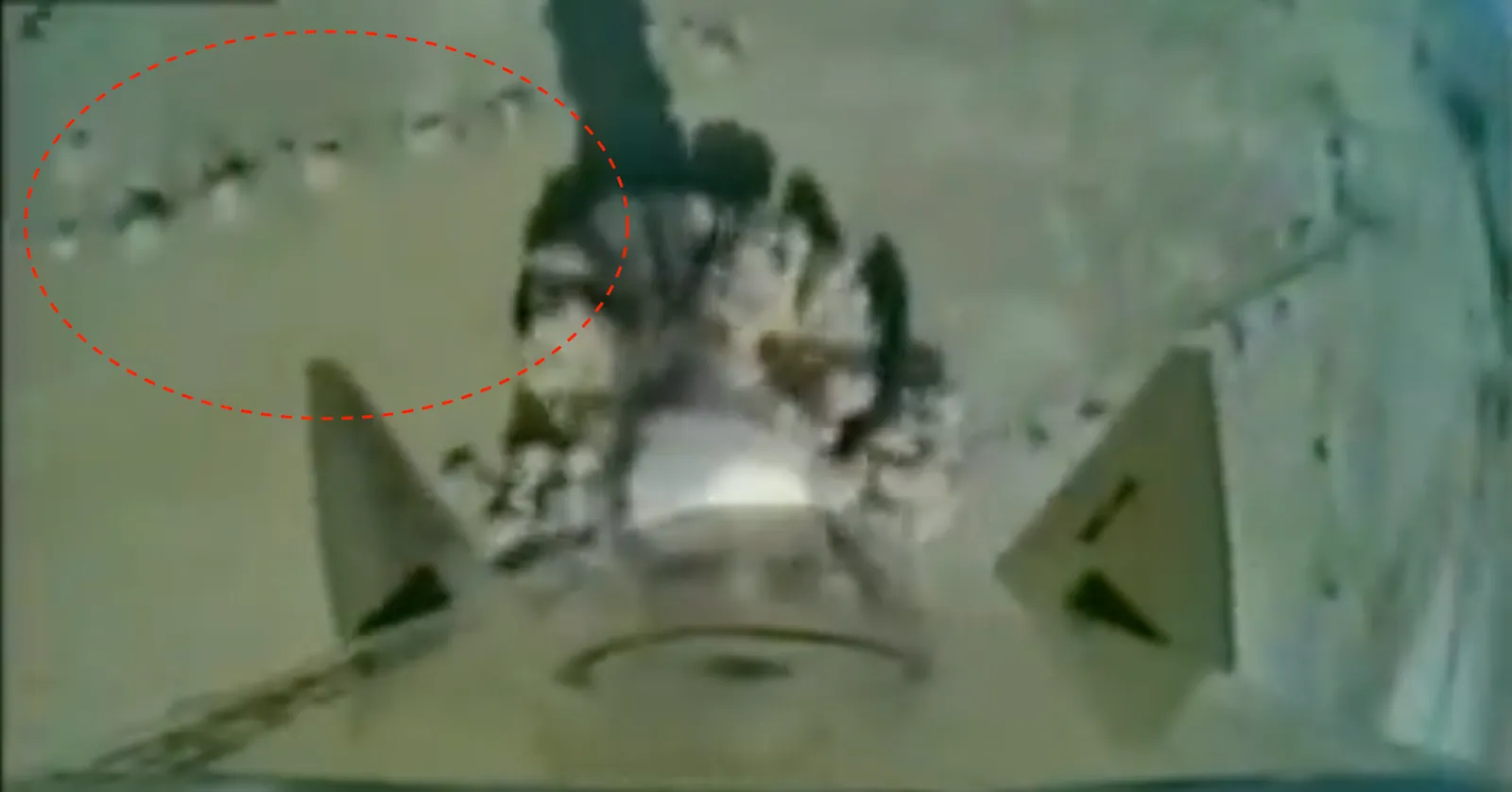

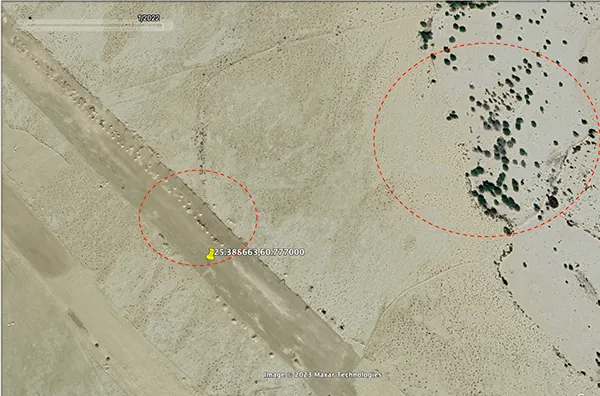
Our initial measurements for the first stage will likely remain the same as the Kheibar Shekan due to them sharing the first stage. There may be mild changes in the simulation due to the lower elevation of the launch location and different launch azimuth. The Fattah also performed a different launch maneuver, banking more aggressively.
This leaves the second stage of the Fattah to be examined. With some parts of the puzzle available to us, but others missing entirely, we must employ some creativity to understand the capabilities of the Fattah's second stage.
The first step was to understand the exact proportions of the second stage. While we could visually identify where the motor went, the actual payload capabilities remained unknown. Estimates varied wildly online, and many sources contained estimates without a methodological reason.
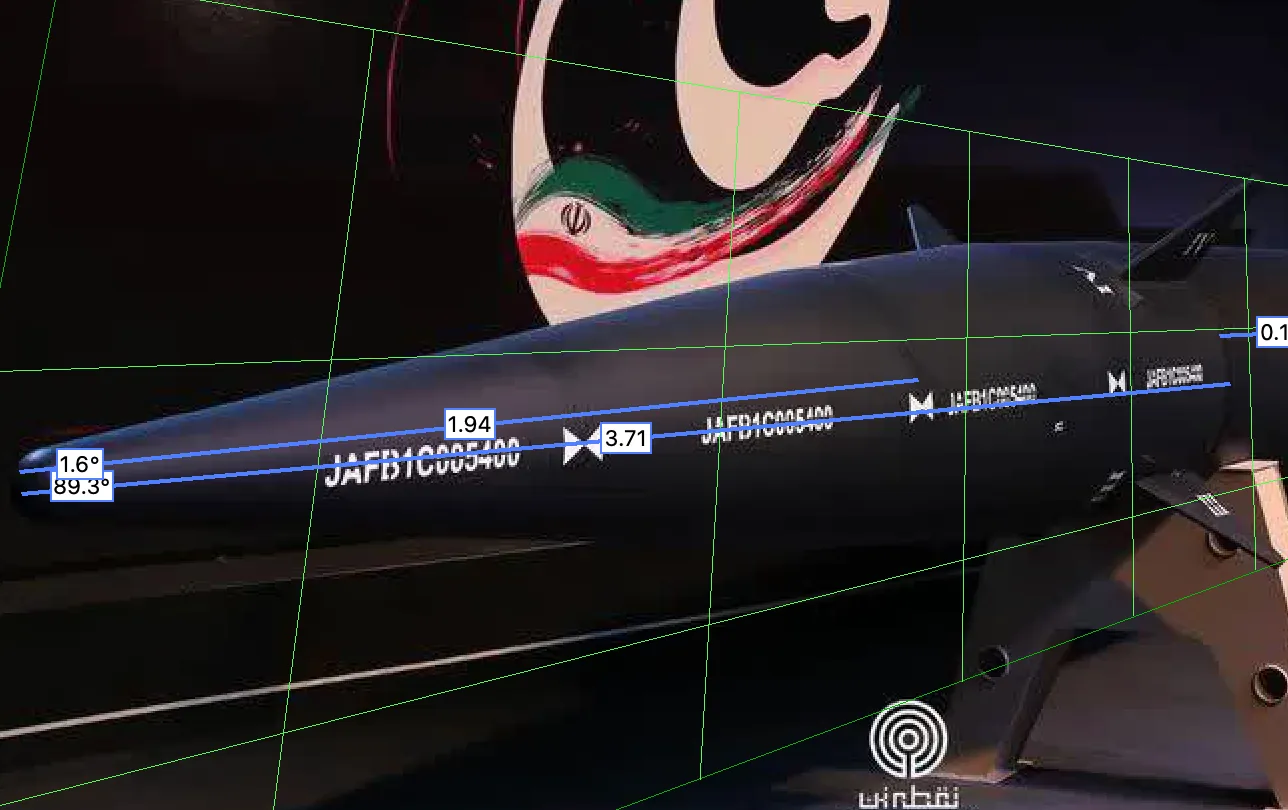
I could deduce from my measurements that the stage was approximately 3.75 meters in length, while the warhead portion accounted for approximately 2 meters. The volume of the second stage could be measured in its entirety, however, it was unknown what the volume of the warhead might be exclusively.
Using trigonometry, we can estimate the amount of warhead being carried.
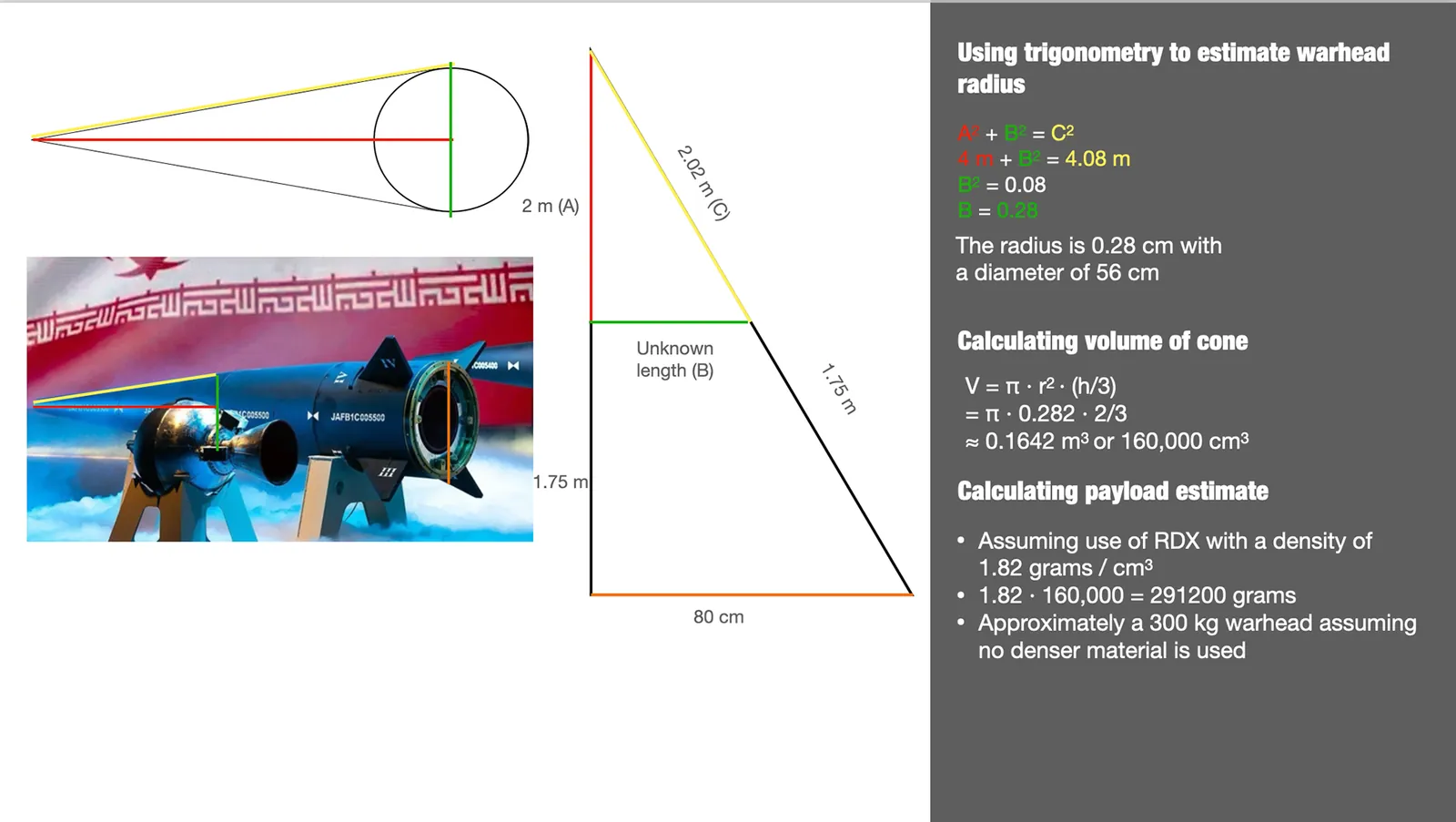
Estimating range
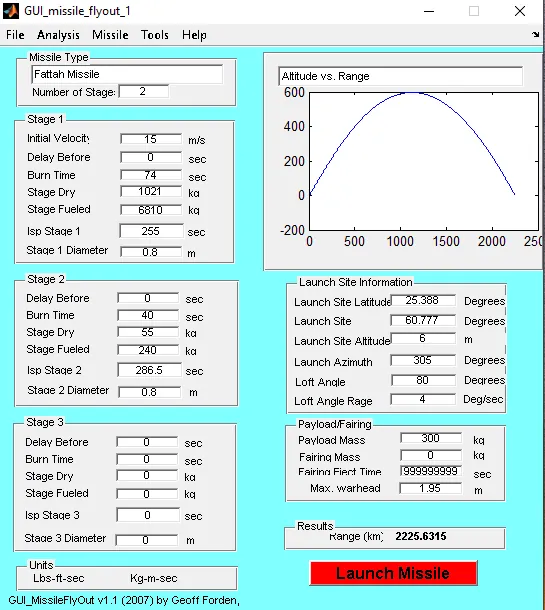
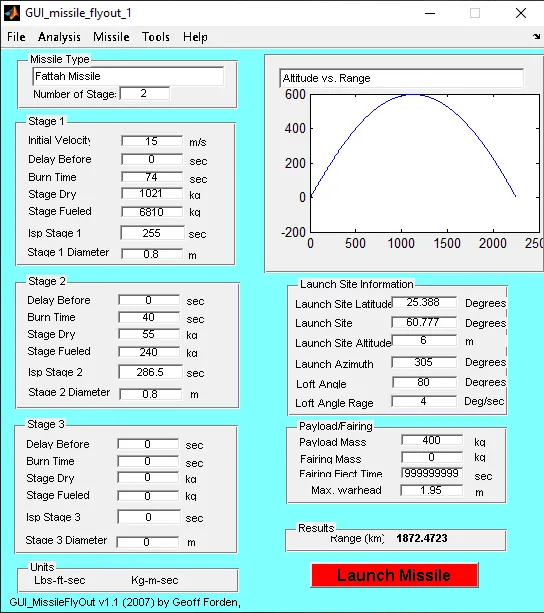
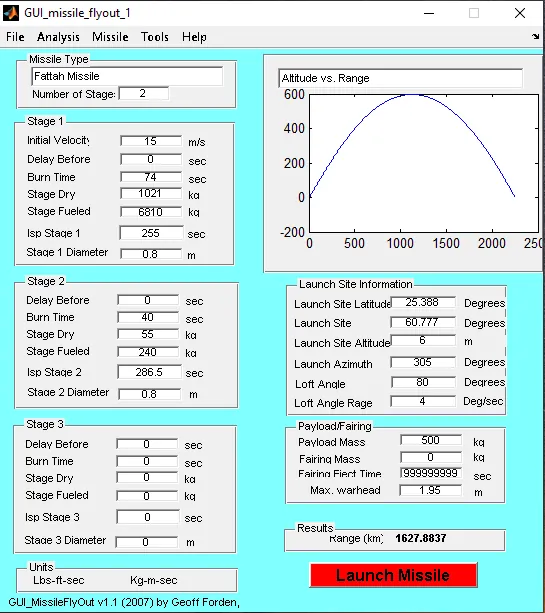
Changes in the weight of the warhead had enormous effects on the range of the Fattah missile.
The Fattah is listed to have a range of 1400km, however, the IRGC has also confirmed that the operational range can be extended to 2000km. The difference in the range likely has to do not only with payload but how the MaRV is used.
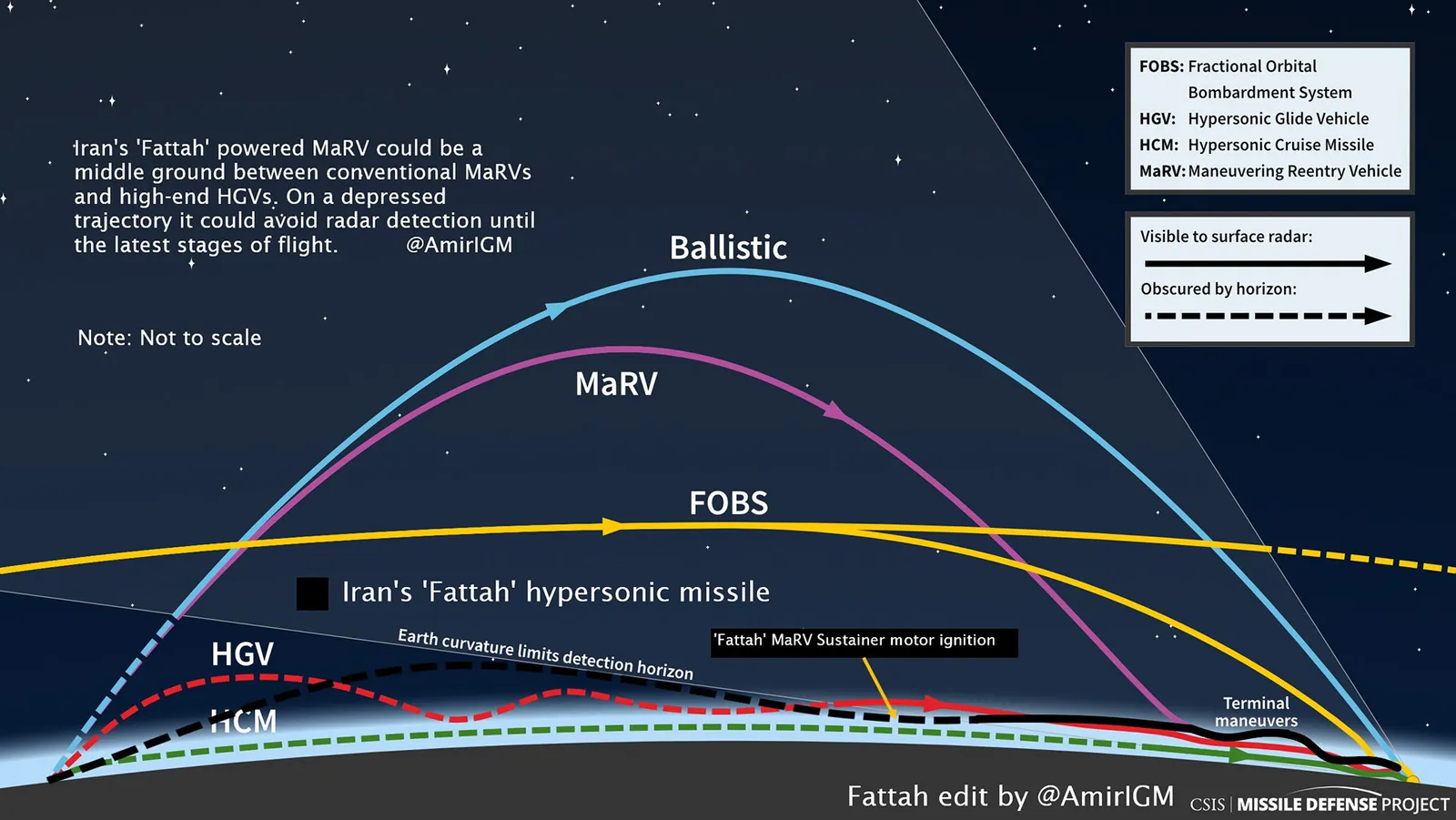
The Iranians claim that the MaRV is supermaneuverable and able to exit and re-enter lower atmosphere to evade missile interceptor technology such as Iron Dome. The more the MaRV maneuvers, the shorter its total range will become. Therefore, we can understand each of these range calculations as not accounting for maneuvers and therefore slightly longer than an actual trajectory.